
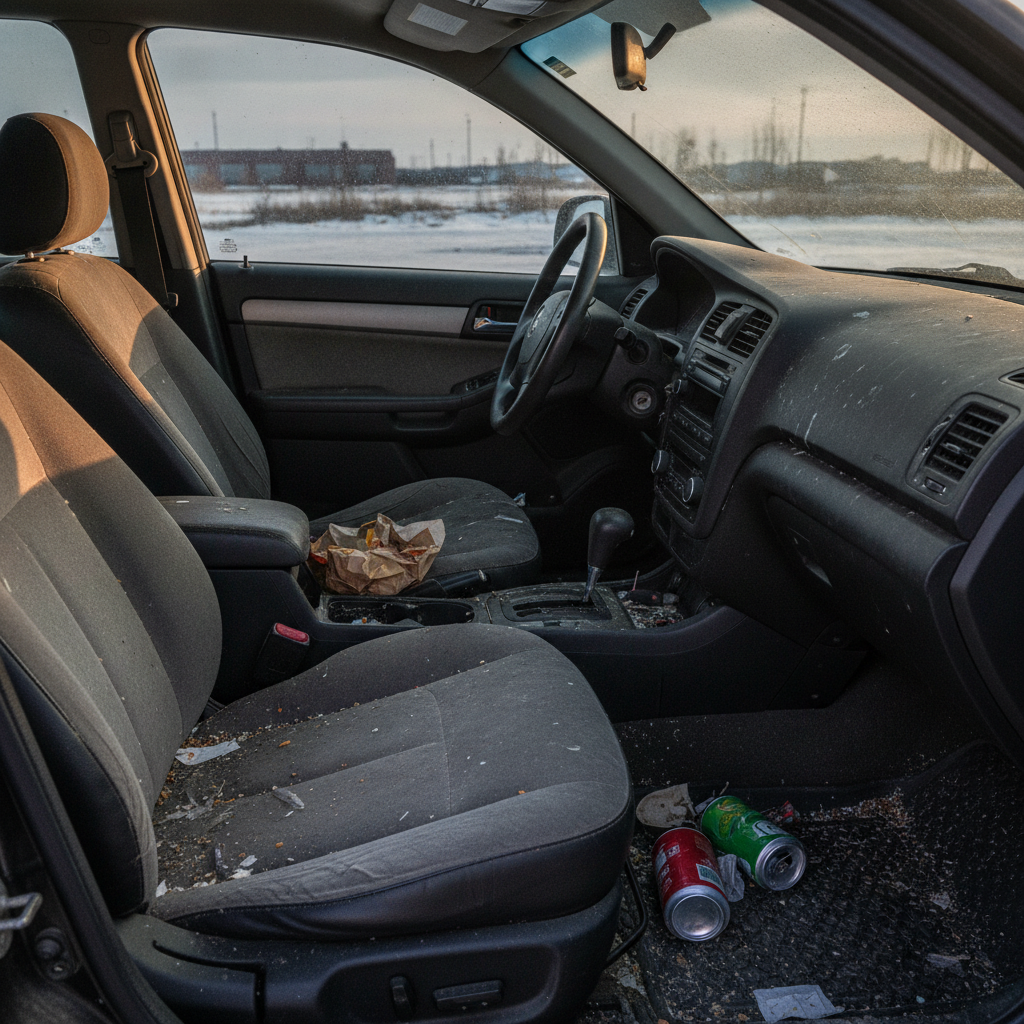
What Happens to Your Car’s Interior When You Skip Professional Detailing for Too Long — And What Garden City and Westland Owners Are Missing
If you’re driving daily in Garden City, Westland, or anywhere across Wayne County, your car’s interior takes a beating that most owners dramatically underestimate. Skipping professional interior detailing doesn’t just leave you with a cluttered cabin or a stale smell — it sets off a slow chain of material degradation that compounds the longer you wait. Leather dries out and cracks. Embedded salt crystals grind into carpet fibers. Dashboard plastics fade and become brittle. Odors that seem manageable eventually saturate the headliner and foam underneath your seats. And once that process is far enough along, no amount of cleaning reverses it — you’re into restoration territory, or replacement.
This is the part that most local detailers gloss over. They’ll sell you a clean car without explaining what was happening under the surface — or what will happen again if you fall back into a long gap between services. At Specialized Automotive in Livonia, we think you deserve to understand exactly what’s at stake inside your vehicle, so you can make an informed decision about care that actually protects your investment.
The Hidden Damage Timeline: What’s Actually Happening Between Washes
Your car’s interior is fighting a slow war on multiple fronts simultaneously, and most of the damage is invisible until it isn’t.
Leather and Vinyl: The First Casualties of Neglect
Leather seating — whether it’s in a daily driver or a collector piece — needs moisture and conditioning to stay supple. When it doesn’t get it, the oils in the leather deplete, the material dries, and surface cracking begins. In Michigan, this problem is amplified by the seasonal extremes. Summer heat and UV exposure through your windshield and side windows accelerate the drying process dramatically. Then in winter, passengers drag in road salt on their clothing and track it across seat bolsters and lower panels. Salt is hygroscopic — it pulls moisture out of materials it contacts, including leather. The result is a compound drying effect that a conditioner wipe from a gas station aisle simply cannot fix.
Vinyl and leatherette surfaces deteriorate differently — they become sticky, peel at seams, and develop a surface texture that traps grime in ways that become progressively harder to remove. Once vinyl is peeling, you’re past the point of conditioning. Professional detailing — done on a reasonable schedule — keeps these materials fed, protected, and clean before degradation takes hold.
Carpet and Fabric: Where Michigan Road Salt Does Its Worst Work
If you drive in Westland, Redford, or anywhere else in Wayne County during winter, your floor mats and carpet are quietly accumulating road salt with every trip. Salt crystals are abrasive. Every time a boot or shoe grinds into a floor mat, those crystals are cutting into the carpet fibers beneath. Over a full Michigan winter, this adds up to measurable physical wear — not just a surface stain, but structural fiber damage that shortens the carpet’s lifespan and creates permanent dulling even after cleaning.
The embedded salt also retains moisture and contributes to mold and mildew growth in the carpet backing and padding — a problem that compounds in spring when temperatures climb and trapped moisture has nowhere to go. This is one of the most common issues we see in vehicles that haven’t had a proper interior detail since the prior spring. A full interior detail that includes extraction, salt removal, and fabric protection is not a luxury for Wayne County drivers — it’s seasonal maintenance with a real return.
Hard Surfaces, Vents, and Controls: Where Grime Becomes Permanent
Dashboard plastics, door panels, center consoles, and vents are porous enough to trap oils, dust, and residue from cleaning products in ways that build up and bond to the surface over time. The UV degradation that affects your exterior paint affects interior plastics too — just more slowly and from the inside out. Surfaces that go untreated fade, develop a milky surface haze, and eventually become brittle. Buttons and switchgear accumulate enough body oil and residue that the printed labels wear and the tactile surface becomes slick and discolored.
A professional interior detail includes proper cleaning of these surfaces with materials appropriate to each substrate — not a single all-purpose spray wiped across everything. The difference matters. Using the wrong product on a matte-finish dashboard creates permanent sheen that can’t be undone. Using harsh degreasers on rubber trim accelerates dry rot. These are judgment calls that experienced detailers make automatically, and that most DIY approaches and quick-service shops get wrong.
What Competitor Shops Often Skip — And Why It Matters for You
Here’s something worth knowing: most local detailers and quick-service car wash shops that offer interior cleaning focus heavily on what’s visible and accessible — the obvious trash removal, a vacuum pass over floor mats, and a spray-down of the dash. What they consistently undertreat are the areas that drive the most long-term damage: the carpet backing beneath the mats, the seat track channels where salt accumulates, the gaps in door seams where moisture collects, the headliner that absorbs odors from below, and the HVAC system that circulates whatever is living in your cabin air through every vent in the car.
Odor remediation is a specific example. A shop that wipes surfaces and calls it an interior detail is not addressing odor at the source — it’s masking it. True odor removal requires identifying the source material (carpet, foam, headliner, ductwork), treating it with an appropriate agent at the right contact time, and extracting or neutralizing the odor-causing compounds. Smoke odors, pet odors, and mold all require different approaches, different chemistry, and more time than a standard service slot allows. At Specialized Automotive, we don’t rush it — and we don’t consider the job done until the result matches the claim.
You can learn more about what a professional interior detail actually covers on our auto detailing services page.
The Cost of Waiting vs. The Cost of Staying Current
This is the conversation most shops avoid because it requires honesty about what a detail can and can’t fix at a given stage of damage. The reality is straightforward: a vehicle with a reasonably maintained interior costs less to detail, takes less time, and delivers a better outcome than one that has been neglected for two or three years. Once leather is cracked, conditioning helps but can’t fill the cracks. Once carpet backing has mold, extraction helps but remediation is a different level of service. Once plastic trim has UV-faded past a certain point, dressing it helps but doesn’t restore the original depth of color.
Regular professional interior detailing — whether that’s every season or every six months depending on how and where you drive — is significantly cheaper over time than the corrective work that accumulates from skipping it. For Wayne County daily drivers dealing with Michigan winters, that math is especially clear.
If your vehicle needs more than a standard interior detail — if there’s visible material damage, deep odor contamination, or significant staining — reach out before assuming it can’t be addressed. Our contact page is the fastest way to get an honest assessment of where your vehicle is and what it needs.
Frequently Asked Questions
How often should I have my car’s interior professionally detailed in Michigan?
For most daily drivers in Wayne County — including Garden City, Westland, Dearborn, and Canton — twice a year is a practical baseline. A thorough interior detail in spring removes the salt and moisture accumulation from winter, and a fall service preps the cabin before the next season. High-use vehicles, vehicles with pets or kids, or vehicles with leather or light-colored interiors may benefit from more frequent attention.
Can professional detailing actually remove odors, or just cover them up?
Yes — proper odor remediation treats the source material, not the air. At Specialized Automotive, we identify where the odor is originating (carpet, foam, headliner, HVAC system) and treat it directly. Masking sprays and air fresheners are not odor removal. The process takes longer and costs more than a surface wipe-down, but the result is actual elimination rather than temporary cover.
My leather seats are starting to crack — is it too late for conditioning to help?
Conditioning will help slow further degradation and improve surface flexibility, but it won’t fill existing cracks. Surface cracking that’s caught early enough can often be significantly improved. Deep cracking or peeling may require leather repair or panel replacement beyond what conditioning alone can address. The sooner you act, the more options you have.
What’s the difference between what a car wash’s interior service includes and what a professional detail covers?
A car wash interior service typically includes vacuuming, surface wiping, and window cleaning — all performed quickly by staff working through a volume model. A professional interior detail involves extraction, fabric and leather treatment, surface-specific cleaning agents, vent and crevice cleaning, deodorization, and conditioning appropriate to each material. The time investment alone is the most visible difference: a thorough interior detail takes hours, not minutes.
Does Specialized Automotive offer interior detailing as part of a storage package?
Yes. Vehicles enrolled in year-round or winter storage receive a complimentary interior and exterior detail as part of the storage agreement. This ensures vehicles go into storage properly cleaned and treated — which matters significantly for long-term material health, especially over Michigan winters. Details about our storage services are on the classic, exotic, and luxury car storage page.
Ready to Get Your Interior Back to Where It Should Be?
Whether you’re driving a daily driver out of Westland, a classic you’re bringing out of winter storage in Canton, or anything in between — your interior deserves the same precision care as your paint. At Specialized Automotive, we’re located near the I-275 / M-14 interchange in Livonia, open seven days a week, and ready to give you an honest assessment of what your vehicle needs. No upselling, no generic packages, no shortcuts. Just straightforward professional work from people who take this seriously.
Contact us to schedule your interior detail or ask any questions — we’re easy to reach and happy to walk you through exactly what the service involves before you commit to anything.