
Is Paint Correction Worth It Before a Ceramic Coating in Novi and Bloomfield Hills?
Yes — and if a detailer tells you otherwise, that’s a red flag worth taking seriously. Ceramic coating is a long-term investment, often lasting several years when applied correctly. But here’s what most shops won’t explain upfront: a ceramic coating bonds directly to your paint’s surface. Every swirl mark, light scratch, oxidation spot, and water etching underneath that coating gets locked in permanently. For owners in Novi, Bloomfield Hills, and across Oakland County who are spending real money on paint protection, skipping the correction step doesn’t save you anything. It just seals your vehicle’s existing flaws under a hardened layer that’s difficult and expensive to remove later.
What Paint Correction Actually Does — and Why It’s Not Optional
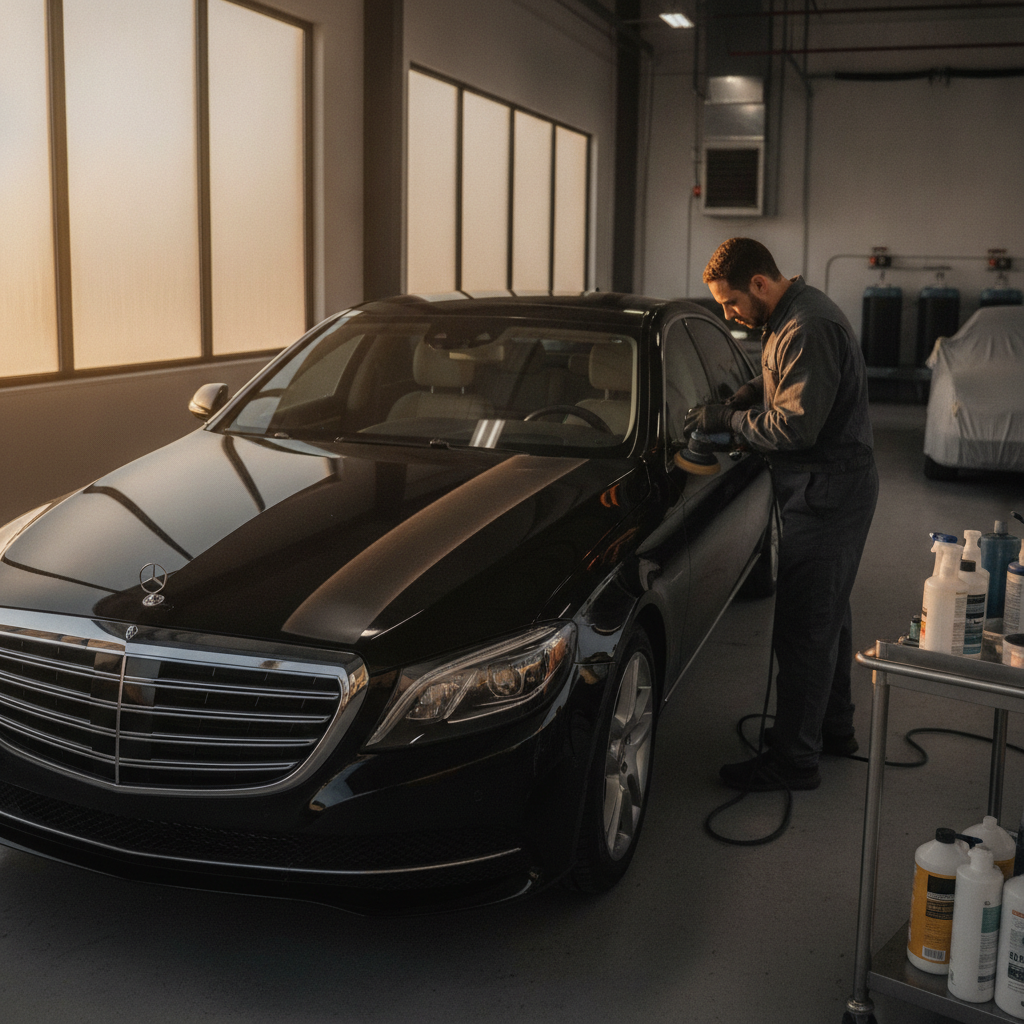
Paint correction is the process of mechanically removing surface-level imperfections from your vehicle’s clear coat. Using a machine polisher and progressively finer compounds and polishes, a trained detailer works to level the clear coat surface — eliminating the microscopic scratches that scatter light and make your paint look dull, hazy, or covered in swirl marks under direct sunlight.
This isn’t a wax buff or a surface gloss treatment. Real paint correction removes material from the clear coat, which is why paint thickness measurement is part of any responsible correction process. Done correctly by someone who knows what they’re doing, it leaves the surface optically flat and genuinely reflective — the kind of finish that makes a dark-colored vehicle look like it’s still wet.
That corrected surface is exactly what ceramic coating is designed to be applied over. The coating bonds chemically to the paint and cures into a semi-permanent protective layer. Apply it over uncorrected paint, and you’ve essentially laminated a flawed surface. The swirl marks don’t disappear — they become permanent.
What Michigan Roads Do to Your Paint Over Time
If you’re driving regularly in and around Metro Detroit — through Livonia, Northville, Plymouth, or down the I-275 corridor — your paint is dealing with a consistent set of aggressors that accelerate surface wear faster than most owners realize.
Michigan’s road salt season is long. From November through March or later, salt brine, sand, and chemical de-icers get kicked up and embedded into your paint. Automatic car washes — especially the tunnel-style washes that are everywhere in Farmington Hills and throughout Wayne County — use stiff rotating brushes that introduce fine swirl marks with every pass. Add summer UV exposure, bird dropping etching, and the thermal stress of our freeze-thaw cycles, and even a three-year-old daily driver often needs meaningful correction before coating is worth doing.
Collector cars and classics that have been sitting in storage or driven seasonally aren’t immune either. UV fading, oxidation, and light scratches from improper washing accumulate over years. Before those vehicles get coated for long-term protection, the paint needs to be evaluated — and in most cases, corrected.
The Gap Most Detailers in the Area Don’t Fill: Honest Paint Assessment
Here’s something worth knowing as you compare shops: many detailers in the Metro Detroit area offer ceramic coating as a standalone service without a meaningful conversation about paint condition first. You’ll see coating packages listed online with pricing — but very little explanation of whether your specific vehicle actually needs a single-stage polish, a multi-stage correction, or anything at all before the coating goes on.
That missing conversation is where a lot of customers end up disappointed. They pay for a coating, it cures beautifully, and then they park the car in direct sunlight for the first time and notice the swirl marks they expected to disappear are still there — permanently encapsulated under the coating they just paid for.
A detailer worth trusting will look at your paint under proper lighting, check paint thickness readings if correction is on the table, and give you an honest assessment of what level of correction — if any — makes sense before coating. Sometimes a light one-stage polish is sufficient. Sometimes a more involved multi-stage correction is the right call. And occasionally a vehicle in genuinely good condition needs only a decontamination wash and panel wipe before coating. The point is that the answer should come from actually inspecting your paint — not from a fixed menu.
At Specialized Automotive, that evaluation is how every coating job starts. Nate built his process working with high-value collector and performance vehicles at a respected Metro Detroit dealership before founding Specialized Automotive in 2022, and that background shapes how every vehicle gets assessed before any work begins. You can learn more about that approach on the paint correction services page.
What to Expect From the Paint Correction + Ceramic Coating Process
When you combine paint correction with ceramic coating, you’re looking at a multi-day process — not an afternoon job. Here’s a realistic breakdown of what’s involved:
- Decontamination wash: Chemical decontamination removes embedded iron particles, tar, and road grime that a standard wash won’t touch. This is the baseline before any correction or coating work.
- Paint thickness measurement: Before correction begins, your clear coat thickness is measured across multiple panels to ensure there’s sufficient material to work with safely.
- Machine polishing: Depending on the condition of your paint, this ranges from a light one-stage polish (for minor swirling) to a full multi-stage correction (for deeper scratches, heavy swirling, or oxidation). Most vehicles need somewhere in between.
- Panel wipe and inspection: After polishing, the surface is wiped down with an IPA solution to remove any polishing oils and reveal the true corrected finish under inspection lighting.
- Ceramic coating application: The coating is applied panel by panel in a controlled environment, then allowed to cure. Cure time varies by product and temperature — your detailer should give you clear post-care instructions before you drive the vehicle.
Total turnaround time for a full correction and quality ceramic coating application is typically two to three days for a standard vehicle. Larger trucks, SUVs, or vehicles in rougher paint condition may take longer. Any shop quoting you a same-day coating with correction included deserves a follow-up question about exactly what steps are being skipped.
Cost Context: What Are You Actually Paying For?
Ceramic coating alone — applied to properly prepped paint — generally runs in the range of $600 to $2,000 depending on vehicle size, coating tier, and the number of layers applied. Paint correction, if needed, adds to that total based on the level of work required. That range can feel wide until you understand what drives the difference: the quality of the product, the number of correction stages performed, the time spent on prep, and the experience of the person applying it.
What you’re not paying for at a shop like Specialized Automotive is a rushed job on a car that will disappoint you the first time you park it in the Birmingham summer sun and see everything that was sealed under the coating. The prep is the investment. The coating is what makes that investment last.
Frequently Asked Questions
Does every car need paint correction before ceramic coating?
Not necessarily — but every car should be inspected before that decision is made. Vehicles with genuinely well-maintained paint and minimal surface defects may only need decontamination and a light polish. Most daily drivers in Michigan, however, have at least enough swirl damage from car washes and seasonal grime to benefit from at least a single-stage correction before coating.
Can I get a ceramic coating in Novi or Bloomfield Hills and have Specialized Automotive do the work?
Yes. Specialized Automotive is located just off the I-275 / M-14 interchange in Livonia, which puts us within easy reach of Novi, Northville, Plymouth, Farmington Hills, and across Oakland County. Many clients drive from Birmingham, Bloomfield Hills, and Southfield specifically because they want the work done right the first time.
How long does ceramic coating last after paint correction?
A professionally applied coating on correctly prepped paint typically lasts two to five years or more depending on the product tier and how the vehicle is maintained afterward. Proper maintenance — avoiding automated brushed car washes, using a pH-neutral soap for hand washing — is what keeps the coating performing at its best over time.
What if my car had a ceramic coating applied somewhere else and I’m not happy with the results?
If a coating was applied over uncorrected paint, the only way to address those trapped imperfections is to remove the coating entirely — which typically requires wet sanding or aggressive compounding — and start over. It’s not a quick fix. This is exactly why getting the prep right the first time matters so much.
Does Specialized Automotive work on collector cars and exotics, not just daily drivers?
Absolutely. Precision prep work on high-value vehicles is core to how Specialized Automotive was built. Whether it’s a weekend driver, a seasonal collector car, or a daily commuter, every vehicle gets evaluated and treated with the same level of care. For collector vehicles that also need off-season storage, check out the classic, exotic, and luxury car storage page to learn about storage and detailing bundle options.
Ready to Get It Done Right the First Time?
If you’re weighing paint correction and ceramic coating for your vehicle — whether you’re in Novi, Bloomfield Hills, Livonia, Plymouth, or anywhere in between — the best starting point is an honest assessment of what your paint actually needs. No pressure, no upsell for correction your vehicle doesn’t require, and no coating applied over a surface that isn’t ready for it.
Specialized Automotive is open seven days a week, fully insured, and satisfaction guaranteed. Reach out to book a consultation or ask any questions about the process. We’ll take a look at what you’re working with and tell you exactly where things stand before any work begins.