
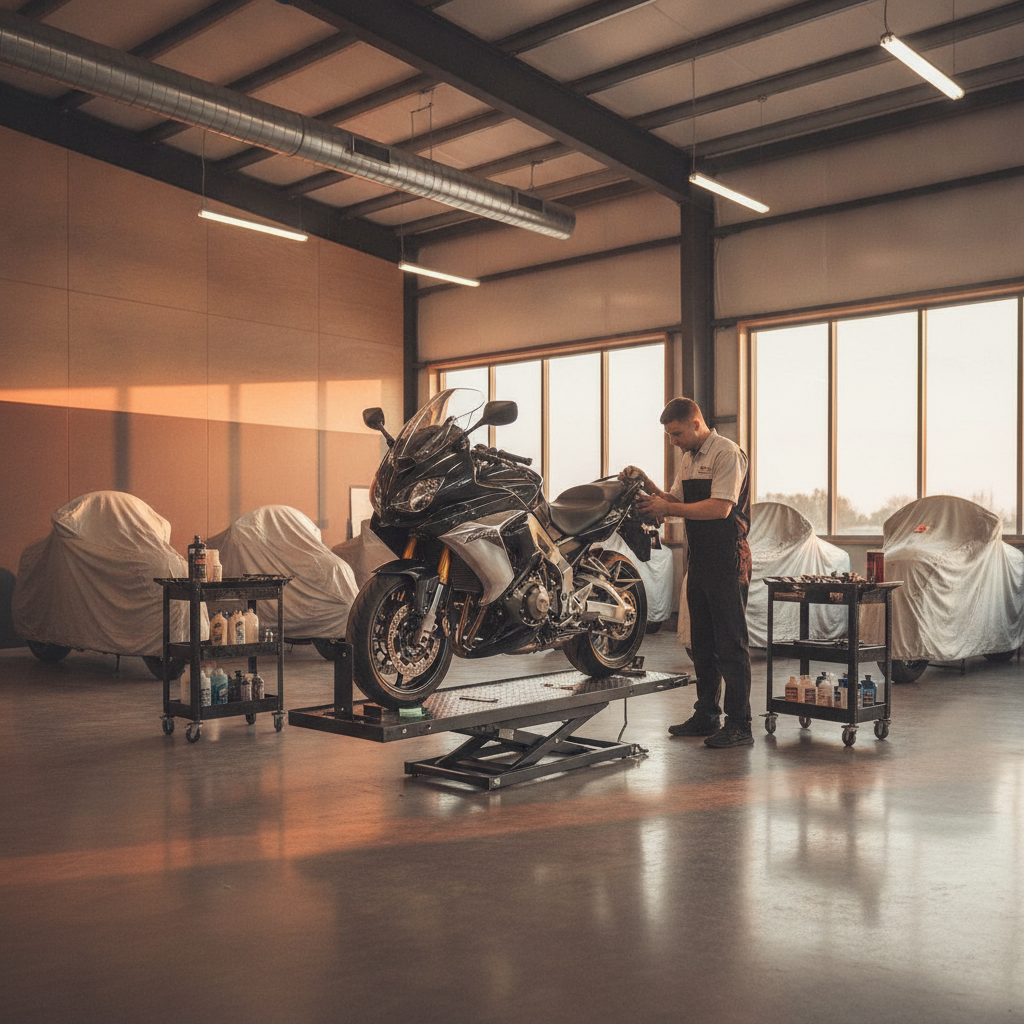
Motorcycle detailing in Northville, Canton, and across Wayne County is one of the most misunderstood services in the detailing world — and most local competitors either ignore it entirely or treat it like a footnote to their car work. If you ride anything from a weekend cruiser to a daily commuter to a meticulously restored vintage bike, the way your machine gets cleaned and protected matters a great deal. Motorcycles are fundamentally different from cars — more exposed surfaces, more sensitive components, tighter clearances, and far less tolerance for the wrong product in the wrong place. Here’s an honest breakdown of what a proper motorcycle detail actually involves, and why it’s worth finding someone who does it right.
Why Motorcycle Detailing Is Its Own Discipline
Think about what a car gives you by default: enclosed engine components, sealed interior panels, a single continuous body surface you can machine-polish in passes. A motorcycle gives you none of that. The engine is fully exposed. Chrome, aluminum, powder-coated steel, painted bodywork, rubber seals, exposed wiring, and brake components are all within inches of each other. Clean one the wrong way and you’ve contaminated something that shouldn’t be touched with the same product.
A detail shop that doesn’t account for those realities — one that reaches for the same all-purpose cleaner they use on car door jambs and starts hosing down your bike — is going to create problems. Water intrusion around electrical connectors, lubricant stripped from cables and pivot points, brake contamination, or streaky residue baked onto a hot exhaust header are all real outcomes when motorcycle detailing is treated casually.
At Specialized Automotive in Livonia, motorcycle detailing is approached with the same precision standard applied to every vehicle that comes through the door. That means component-specific products, controlled water pressure, and deliberate technique — not a pressure washer and a bucket of suds.
What a Professional Motorcycle Detail Actually Covers
Degreasing the Drivetrain and Engine Cases — Without Collateral Damage
The engine and drivetrain area is where most DIY attempts either go wrong or simply give up. Grease and chain lube migrate everywhere over a riding season, and built-up grime on engine cases and frame tubes doesn’t come off with a rinse. A proper degreasing step uses the right concentration of product, controlled application (not a spray-and-flood approach), and careful agitation with brushes sized for the space. Exposed sensors, intakes, and connectors get masked or avoided entirely.
After degreasing, those aluminum cases and covers often benefit from a dedicated metal polish — not the same compound used on clear coat — to bring back the original luster. It’s a step that makes a real difference on naked bikes and older machines where those surfaces are front and center.
Paint and Bodywork: Decontamination and Protection
Motorcycle bodywork is typically smaller in surface area than a car panel, but it’s no less vulnerable to the same environmental abuse — UV exposure from Michigan summers, iron fallout from brake dust, road tar, and the residual salt that lingers on bikes ridden in early spring before roads are properly cleared.
A thorough detail starts with a proper wash and decontamination pass — clay bar on painted surfaces where needed — before any protection product goes down. For riders who want more than a coat of wax, ceramic coating for motorcycle bodywork is worth a serious look. The same chemistry that protects car paint applies here: hydrophobic protection, UV resistance, and a dramatically easier cleaning process for every ride after application. For a bike that spends the riding season on the road and the off-season in storage, coating the bodywork before winterizing is one of the best long-term investments you can make.
Chrome, Exhaust, and Metal Surfaces
Chrome is unforgiving. Water spots left from a lazy rinse will etch into chrome over time, especially with the mineral content in Michigan tap water. A proper detail uses dedicated chrome-safe polishes and sealing products — not whatever happened to be nearby — and takes the time to work around baffles, heat shields, and mounting hardware. Exhaust headers and mufflers require their own products designed for high-heat surfaces, because anything that can’t handle heat will burn off, smoke, or stain the moment the engine warms up.
Rubber, Seals, Tires, and Trim
Tires get cleaned and conditioned — not just wiped — and rubber seals and gaskets are treated carefully to avoid cracking from the wrong solvent. Seat material (whether vinyl, leather, or synthetic) gets its own cleaning and conditioning pass. Instrument clusters, mirrors, and windscreens are handled with dedicated optics-safe products rather than glass cleaner that may contain ammonia.
Seasonal Motorcycle Detailing in Michigan: What Riders in Plymouth and Canton Need to Consider
Michigan riding season is shorter than most riders would like, which means motorcycles spend a significant portion of the year sitting — in a garage, shed, or ideally a climate-controlled storage facility. The condition your bike goes into storage in is roughly the condition it will come out in, minus whatever oxidation, moisture intrusion, or rubber degradation happens while it sits.
A pre-storage detail isn’t optional if you care about the bike. Salt and road grime left on metal over a Michigan winter will accelerate corrosion. Brake dust left on chrome will pit it. Untreated paint will oxidize and lose depth. A thorough end-of-season detail removes all of that before the bike goes away, and a fresh detail at the start of riding season gets it back to where you want it. Riders in Plymouth and Canton who keep bikes stored near the I-275 corridor often bring their machines to us at the beginning and end of every season — it’s a simple habit that keeps a bike looking and functioning the way it should.
If you’re looking for indoor, secured storage for your motorcycle during the off-season, that’s a service we also offer at Specialized Automotive. Climate-controlled, insured, and monitored — not a backyard shed or a buddy’s unheated garage.
What Most Local Shops Miss With Motorcycle Detailing
Here’s the gap that’s worth calling out directly: most detailing businesses in the Metro Detroit area that mention motorcycle detailing don’t explain what they actually do. You’ll find a checkbox on a service menu and a price, and that’s it. No explanation of how they handle exposed components, what products they use on heat-sensitive surfaces, or how they approach the decontamination step before protection is applied.
That vagueness isn’t accidental — it often reflects a shop that has adapted car detailing techniques to a motorcycle without fully rethinking the process. If a shop can’t tell you specifically how they degrease an engine without contaminating brake components or what they use on exhaust surfaces, that’s worth knowing before you hand over a bike you care about.
Nate founded Specialized Automotive in 2022 after years of working with high-value classic and performance vehicles at a respected Metro Detroit collector-car dealership. That background means every vehicle type — car, truck, or motorcycle — gets a process built around its specific materials and construction, not a one-size-fits-all approach borrowed from the nearest car wash.
Frequently Asked Questions: Motorcycle Detailing Near Northville and Canton
How long does a professional motorcycle detail take?
Depending on the bike’s condition and the services requested, most full motorcycle details run between two and four hours. A bike coming out of winter storage in rough shape will take longer than a clean, well-maintained machine receiving a mid-season refresh.
Can you ceramic coat a motorcycle the same way you’d coat a car?
Yes — the chemistry is the same and the application process follows the same logic, though the surfaces are smaller and more varied. Painted bodywork, chrome, and even bare metal surfaces can all be coated with appropriate products. Prep work (decontamination and paint correction if needed) is just as critical on a motorcycle as on a car.
Is it worth detailing a motorcycle before winter storage?
Without question. Salt, brake dust, road grime, and chain lubricant left on the bike over winter will do real damage. A proper pre-storage detail removes those contaminants and applies protection so the bike comes out of storage in good condition rather than needing a repair job in the spring.
Do you detail all types of motorcycles — not just Harleys or cruisers?
Every type — sport bikes, cruisers, touring bikes, naked bikes, vintage and restored machines, and everything in between. The detailing approach is adjusted based on the bike’s construction, materials, and condition, not defaulted to a single method.
Do you offer motorcycle storage in addition to detailing?
Yes. Specialized Automotive offers secured, indoor, climate-controlled storage for motorcycles alongside cars and other vehicles. Riders in Northville, Canton, and across Washtenaw County who want their bikes properly stored — not just parked in an unheated garage — are welcome to reach out for current availability.
Ready to Book a Professional Motorcycle Detail in the Livonia Area?
Whether you’re coming off a full riding season, prepping a restored bike for a show, or getting ahead of winter storage, Specialized Automotive treats your motorcycle with the same precision and respect we bring to every vehicle on the property. We’re located near the I-275 / M-14 and I-96 interchange in Livonia, and we’re open seven days a week by appointment. Contact us here to schedule your motorcycle detail or ask about storage availability — we’ll give you a straight answer on what your bike needs and what it will take to get it there.