
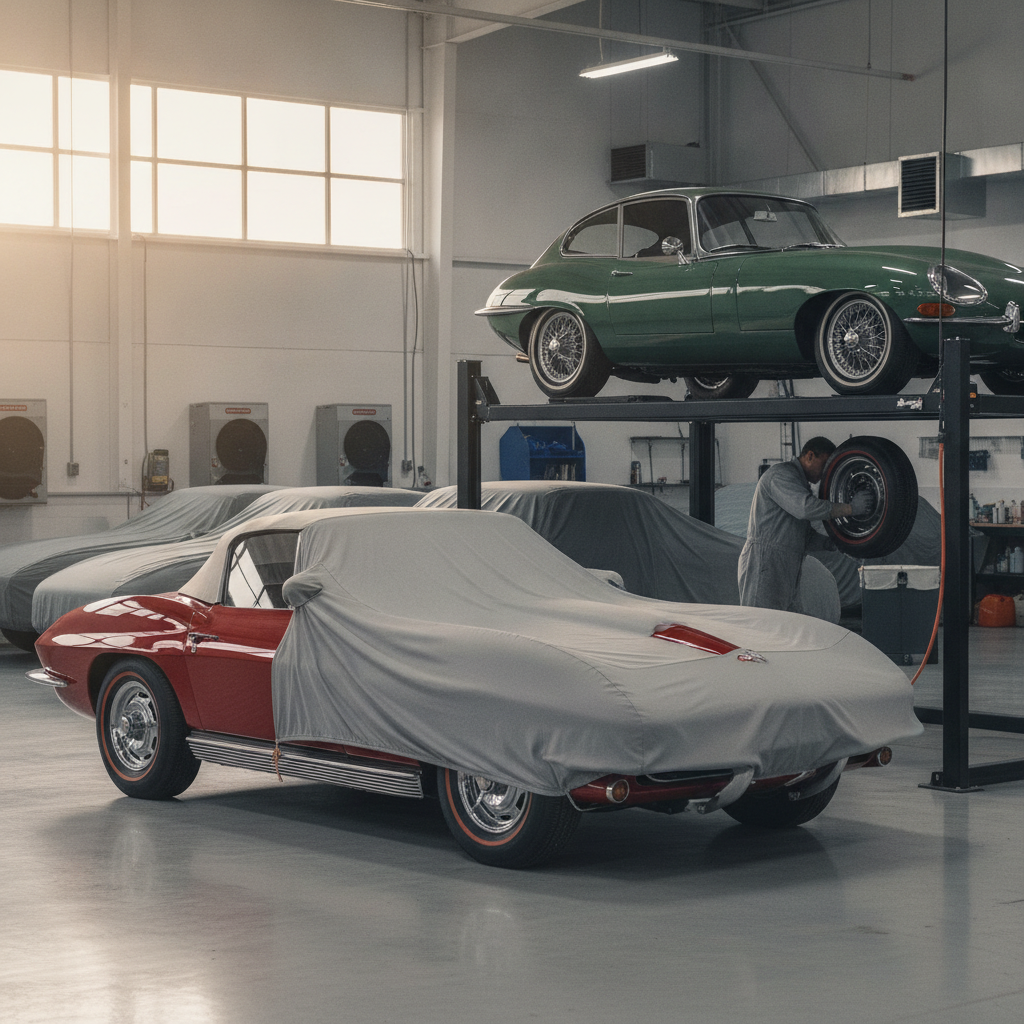
How Do You Prep a Classic Car for Long-Term Storage in Southfield and Birmingham Without Damaging the Paint?
The short answer: you detail it properly first, you address the paint before it sits, and you choose a facility that actually understands what a collector car needs. Classic and collector car owners from Southfield and Birmingham to Bloomfield Hills and Northville make the same avoidable mistake every fall — they drive their vehicle into storage without doing the prep work, and they pull it out in spring wondering why the paint looks worse, the interior smells off, or there’s surface oxidation where there wasn’t one before. Michigan winters are not gentle to vehicles that aren’t ready for them, even ones that never see a salted road.
Why Pre-Storage Prep Is a Different Conversation Than a Standard Detail
There’s a meaningful difference between cleaning a car you’re about to drive and preparing one that’s going to sit for four to six months. A standard detail gets the vehicle clean. Pre-storage prep gets the vehicle stable. Every contaminant left on the paint — road film, industrial fallout, tar, water spots, even fingerprints — will continue to work against the clear coat while the car is stationary. Moisture locked under a cover on paint that wasn’t fully decontaminated will etch and stain over time. This is one of the most underappreciated realities of long-term collector car storage in Michigan, and it’s a topic that most detailing content in this region glosses over entirely.
At Specialized Automotive in Livonia, we see this regularly when owners bring in cars that were stored at other facilities or in their own garages after a quick wash. The paint came in fine; it left with new problems. Pre-storage detailing is a deliberate, multi-step process — not a shortcut.
The Paint Prep Sequence Before Long-Term Storage
If you’re storing a classic, vintage, or collector vehicle for a Michigan winter, here’s what the paint prep should actually involve:
- Thorough exterior wash and decontamination. This goes beyond a rinse and soap. Iron fallout remover, clay bar treatment, and a full panel wipe-down with a prep solvent are standard before anything protective goes on. You’re removing everything the paint has collected during the driving season — including contaminants you can’t see.
- Paint inspection and correction if needed. Storage doesn’t freeze a paint problem in place — it can make it worse. Swirl marks, light scratches, and water etch spots should be addressed before the car sits. Trying to correct paint that’s been sealed under a cover for six months adds an unnecessary step in spring. If you’re considering paint correction before storage, this is the right moment to do it.
- Protective coating or sealant application. A properly applied ceramic coating is genuinely the best surface protection you can put on a vehicle going into storage. It bonds to the clear coat, creates a chemically resistant layer, and makes spring prep far easier. For a collector car you plan to keep long-term, the investment is well-justified. For owners not ready for a full ceramic, a high-quality paint sealant applied by hand is still far better than nothing.
- Interior prep. Moisture is the enemy of a stored interior. Leather should be cleaned and conditioned. Carpet and upholstery should be fully dry before the car is sealed up. Remove any food, organic material, or moisture sources that could mold or mildew over a long winter.
What Collector Car Owners Near Birmingham and Bloomfield Hills Often Overlook
Owners from the Birmingham and Bloomfield Hills area — where the collector and classic car community is genuinely strong — tend to be meticulous about their vehicles during the driving season. But pre-storage prep gets treated as an afterthought because the car isn’t being driven. That’s exactly the wrong frame. The months a vehicle sits undriven are when slow, invisible damage compounds. Consider:
- Brake rotors can develop surface rust that becomes pitting if the vehicle sits on slightly damp rotors inside a humid garage.
- Tire flat-spotting is real on vehicles that sit stationary for months, particularly in a facility where temperature swings occur.
- A cover placed over a dirty or even slightly contaminated paint surface will trap moisture and cause more damage than going without one.
- Fuel left untreated in a carburetor or fuel system will varnish. This one is basic — but it still gets skipped.
None of these are detailing issues specifically, but they frame why proper storage preparation is a holistic conversation — and why it starts with the condition of the paint and exterior before the car goes in.
Choosing the Right Storage Facility — The Questions Most Owners Don’t Ask
Classic car owners in Metro Detroit have more storage options than they had ten years ago, but quality varies widely. A building that stays above freezing is not climate-controlled storage. A unit with a padlock is not secured storage. When evaluating a facility for a collector vehicle, the questions that matter are specific:
- Is the facility temperature and humidity regulated, or just insulated?
- What is the security setup — cameras, access control, overnight monitoring?
- Is the facility insured, and does that coverage extend to vehicles stored inside?
- What is the access policy — can you visit your vehicle, start it periodically, or check on it?
- Does the facility offer detailing before drop-off or when you pick up in spring?
At Specialized Automotive, our classic, exotic, and luxury car storage is indoor, secured, and designed specifically for vehicles that require more than a dry concrete floor. We’re located near the I-275 / M-14 and I-96 interchange in Livonia, which makes drop-off and pickup straightforward for owners coming from Southfield, Farmington Hills, Northville, and across Oakland County. For owners who sign up for year-round or winter storage, we include a full interior and exterior detail with the package — so your vehicle goes in clean and comes out ready.
Does a Ceramic Coating Change the Storage Prep Process?
If your collector car already has a professional-grade ceramic coating applied, your pre-storage paint prep is considerably simpler. The coating has already bonded to the clear coat and created a barrier against contaminants, moisture, and oxidation. A thorough wash and a coating-compatible maintenance spray is typically all that’s needed on the exterior before storage. This is one of the concrete long-term payoffs of a ceramic coating for collector car owners — less prep labor every season, and more consistent protection whether the car is being driven or stored. If your vehicle doesn’t have one and you’re prepping for storage, this is the right time to consider it seriously.
Frequently Asked Questions
How far in advance should I schedule pre-storage detailing?
For collector cars, schedule your pre-storage detail at least two to three weeks before your intended drop-off date. If paint correction is part of the process, build in additional time. Fall scheduling fills quickly in Michigan — owners from Southfield, Birmingham, and across Wayne and Oakland counties are often working on the same timeline.
Is a breathable car cover necessary even in a climate-controlled facility?
In a properly regulated indoor environment, a breathable cover can provide a secondary layer of dust protection, but it’s not a substitute for a quality facility. More importantly, a cover should never go on a vehicle with any surface contamination, moisture, or incompletely cured coatings. If in doubt, leave the cover off and let the facility’s climate control do its job.
Should I run the engine periodically while the car is in storage?
This is a debated topic among collector car owners. If you can bring the engine fully up to operating temperature and do a short drive, it’s beneficial — it circulates fluids, keeps seals from drying, and lets moisture burn off the exhaust. A brief idle is actually worse than not running it at all, because it can introduce condensation without burning it off. The best approach depends on your vehicle, fuel system, and how long it will sit.
What’s the difference between a winter storage detail and a standard full detail?
A winter pre-storage detail is specifically oriented toward protecting the vehicle through months of inactivity — full decontamination, paint protection, interior conditioning for humidity, and mechanical prep coordination. A standard detail focuses on restoring appearance for a vehicle in active use. Both matter; they serve different purposes.
Do you offer pickup or drop-off for classic car storage from the Southfield or Birmingham area?
Contact us directly to discuss logistics. We work with owners across Metro Detroit and Oakland County, and we can talk through the specifics for your vehicle and location.
Ready to Store Your Collector Car the Right Way This Season?
If you own a classic, vintage, or collector vehicle in the Metro Detroit area and you want it stored — and prepped — with the attention it deserves, Specialized Automotive is the facility built for exactly that. Nate founded this business in 2022 after years of preparing and detailing high-value collector and performance vehicles at a respected Metro Detroit dealership. Every vehicle that comes through our doors gets treated like it matters, because to us it genuinely does.
We’re open seven days a week, fully insured, and located in Livonia with convenient access from Southfield, Birmingham, Farmington Hills, and across the region. Reach out today to schedule a consultation or reserve your storage space — and let’s make sure your vehicle comes out of this winter exactly the way it went in.