
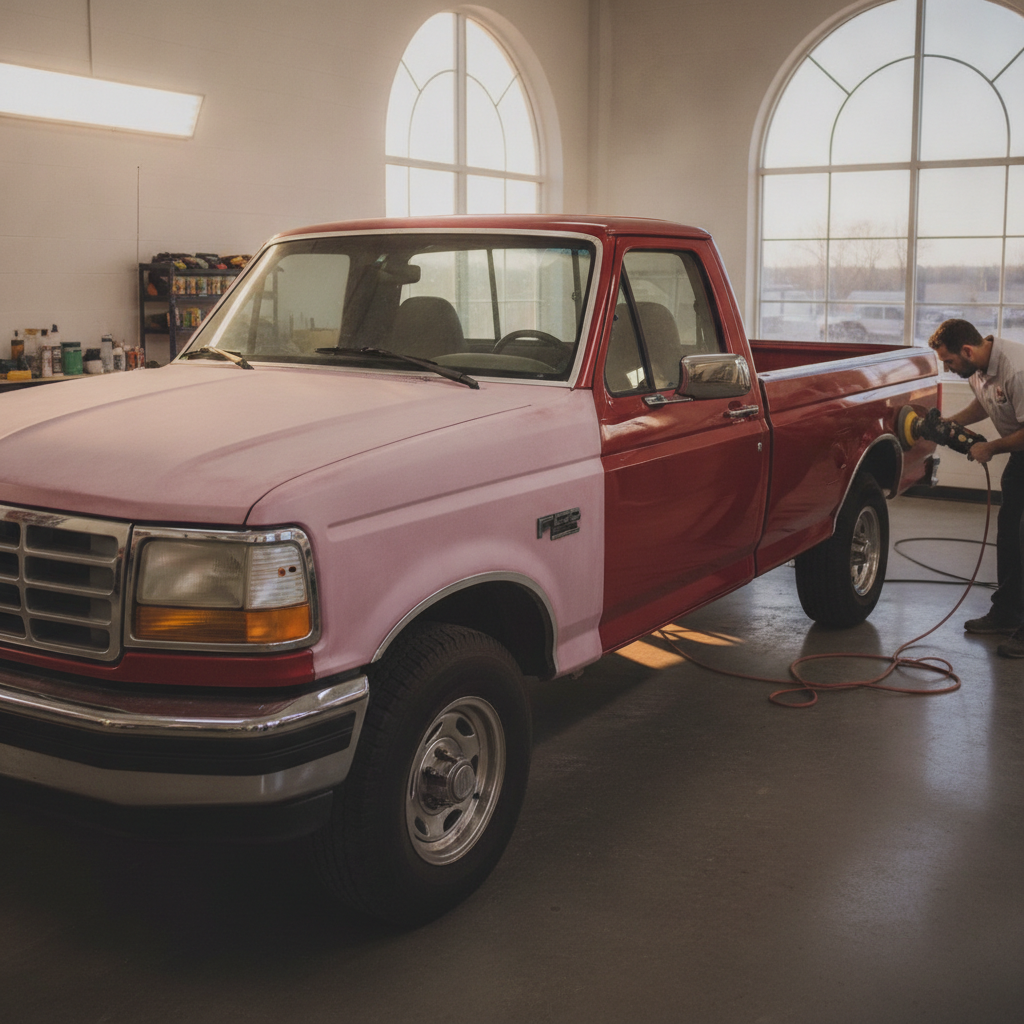
How Do You Bring Back Faded, Oxidized Paint on a Daily Driver in Westland or Wayne — Without Spending a Fortune?
If your daily driver is starting to look chalky, dull, or like the color is slowly washing out — especially on the hood, roof, and trunk lid — you’re dealing with paint oxidation. It’s one of the most common paint problems on vehicles in Westland, Wayne, and the rest of Wayne County, and it’s almost always caused by the same combination of factors: years of Michigan UV exposure, environmental contamination, and paint that wasn’t adequately protected. The good news is that oxidation doesn’t automatically mean a repaint. In the majority of cases, professional paint correction can bring a faded finish back to life — and at a fraction of what a body shop would charge. Here’s what you actually need to know.
What Paint Oxidation Actually Is — And Why Michigan Accelerates It
Your car’s paint isn’t just color. It’s a layered system: a base coat that carries the pigment, and a clear coat on top that protects it. Oxidation happens when UV radiation and atmospheric oxygen break down that clear coat at a molecular level. The damaged clear coat turns cloudy and loses its ability to reflect light properly — which is what gives oxidized paint that flat, chalky look.
Michigan’s climate makes this worse than most people realize. Summer UV intensity here is deceptively strong, and the combination of road salt residue from winter, acid rain, and temperature extremes from November through April creates a relentless cycle of stress on your paint. Vehicles parked outside in Westland or Garden City that go unprotected year-round absorb all of it. A daily driver that gets driven hard and washed at a touchless car wash a few times a year doesn’t stand much of a chance.
One thing worth understanding: oxidation almost always starts in the clear coat, not the base coat. That matters, because it means the color underneath is often in better condition than the surface suggests. A trained detailer can assess whether enough clear coat remains to work with — and in most cases, on a vehicle that isn’t severely neglected, the answer is yes.
What Paint Correction Can Actually Fix on a Faded Daily Driver
Paint correction uses machine polishing to cut through the damaged outer layer of clear coat and expose the cleaner, less-oxidized material beneath. Done properly, it removes the oxidation, restores the clarity and gloss of the clear coat, and brings the color back to something close to what it looked like when the vehicle was new.
This is not the same as using a bottle of polishing compound from an auto parts store and a foam applicator pad. That approach — which a lot of people try first — typically removes some oxidation from the very top surface but leaves behind haze, light micro-scratching, and uneven results. Without machine correction and the right combination of compound and polish, you’re not cutting deep enough or refining the surface properly. The improvement doesn’t last, and in some cases you’ve removed the last of a thin clear coat unevenly, which makes professional correction harder afterward.
A professional single-stage paint correction is typically the right starting point for a daily driver with moderate oxidation — it addresses the bulk of the damage without the cost and time of a full multi-stage correction. For a vehicle with more severe fading or additional defects like swirl marks and deeper scratches, a two-stage process makes more sense. At Specialized Automotive in Livonia, the correction process is always tailored to the condition of the specific vehicle rather than a one-size approach — which is how it should work. Learn more about what that process involves on the paint correction services page.
The Step Competitor Sites Skip: What Happens If You Don’t Protect After Correction
This is the gap that most local detailing content completely ignores — and it’s the most important part for daily driver owners in Westland, Redford, and Wayne to understand.
Paint correction removes damaged clear coat. But it doesn’t make your paint immune to the conditions that caused the damage in the first place. If you correct an oxidized hood and then send the vehicle back out into Michigan summers and winters with nothing protecting it, you’re going to be dealing with the same problem again in two or three years. The clear coat that was exposed is actually slightly more vulnerable in the short term because the top layer has been removed.
This is exactly why a ceramic coating applied after paint correction isn’t just an upsell — it’s the logical conclusion of the process. A properly applied ceramic coating bonds to the corrected clear coat, creating a semi-permanent layer of UV protection, hydrophobic chemistry, and chemical resistance. It doesn’t prevent all damage forever, but it dramatically slows the rate at which UV, road contamination, and oxidation attack the surface again. For a daily driver owner in Wayne County who doesn’t have time for frequent detailing, that kind of long-term protection makes real practical sense.
The cost of a paint correction followed by a ceramic coating on a daily driver is typically far less than most people expect — and far less than a single-panel repaint at a body shop. If you want to understand what that combination looks like for your specific vehicle, the ceramic coating page is a good starting point.
How to Tell If Your Paint Is Still Correctable
Not every faded vehicle is a paint correction candidate. If the clear coat has failed completely — peeling, flaking, or completely delaminated — polishing can’t fix it. That’s a repaint situation. But clear coat failure of that severity is less common than people assume. The more typical scenario, especially on vehicles from the last fifteen years, is oxidation that has progressed through the outer clear coat but hasn’t fully compromised the system.
A few things to look for when assessing your own vehicle:
- Chalky or milky surface haze that doesn’t wipe away with a damp cloth — that’s oxidation in the clear coat, and it’s a good correction candidate.
- Flat, dull color without any peeling or texture change to the paint surface — also correctable in most cases.
- Visible peeling or bubbling on panel edges, around trim, or in sunlight-exposed areas — this is clear coat failure, and correction won’t resolve it.
- Areas where you can feel a rough, gritty texture even after washing — that can indicate environmental contamination embedded in the clear coat, which a clay bar treatment during detailing prep can address before correction begins.
The most reliable way to know for certain is to have a professional assess it in person. A shop that actually knows what they’re doing will tell you honestly when correction can help and when it can’t.
What Westland and Wayne Daily Driver Owners Should Ask Before Booking
If you’re looking at paint correction for a vehicle that’s accumulated years of Michigan road exposure, here are the questions worth asking any shop before committing:
- Do you assess clear coat depth before quoting correction work?
- What stage of correction are you recommending for my specific vehicle — and why?
- What protection do you recommend applying after correction, and what does that include?
- Is the correction performed by hand, machine, or both — and what compounds and polishes do you use?
- Can I see examples of correction work on similar vehicles (daily drivers, not just show cars)?
A shop that gives you straight, specific answers to these questions is a shop worth trusting. One that gives you vague reassurances or jumps straight to pricing without assessment is worth being cautious about.
Frequently Asked Questions: Faded Paint Restoration in Westland, Wayne, and the Surrounding Area
Can you really fix oxidized paint without repainting?
In most cases, yes — as long as the clear coat is still physically intact. Paint correction removes the oxidized outer layer and restores clarity to the clear coat beneath. A full repaint is only necessary when the clear coat has completely failed or the base coat itself is damaged.
How long does paint correction take on a daily driver?
A single-stage correction on a typical passenger car usually takes a full day. A more thorough two-stage correction, or work on a larger vehicle, can take longer. Your detailer should give you a realistic timeline before you drop off — not a rushed estimate designed to get you through the door.
Does paint correction damage my paint?
Done correctly, no. Professional machine polishing removes a very small amount of clear coat — measured in microns — to expose the healthier material beneath. A qualified detailer will measure clear coat depth and work accordingly to ensure there’s adequate material remaining. Untrained or aggressive polishing without proper technique or measurement can cause problems, which is why who does the work matters.
How soon after paint correction should I apply a ceramic coating?
Ideally, the coating goes on the same day or within a day or two of the correction, before the freshly exposed clear coat picks up new contamination. Most shops that do both services will coordinate this as part of the same appointment or booking sequence.
Is paint correction worth it on a high-mileage daily driver?
It depends on the condition of the paint and what matters to you. If the paint is structurally sound and you plan to keep the vehicle, correction and protection is almost always a better investment than letting the oxidation continue to progress. Even on a high-mileage commuter, a well-maintained exterior adds to resale value and makes the vehicle more enjoyable to drive daily.
Ready to See What Your Paint Actually Looks Like Under the Oxidation?
Specialized Automotive is located near the I-275 / M-14 interchange in Livonia — convenient for owners coming in from Westland, Wayne, Redford, Garden City, and across Wayne County. Whether you’re driving a well-used commuter or a vehicle you actually care about keeping in good shape, we’ll assess your paint honestly and recommend a correction process that makes sense for what you’ve got. We’re open seven days a week, fully insured, and satisfaction guaranteed on every service. Visit the contact page to request a free consultation or book your appointment.