
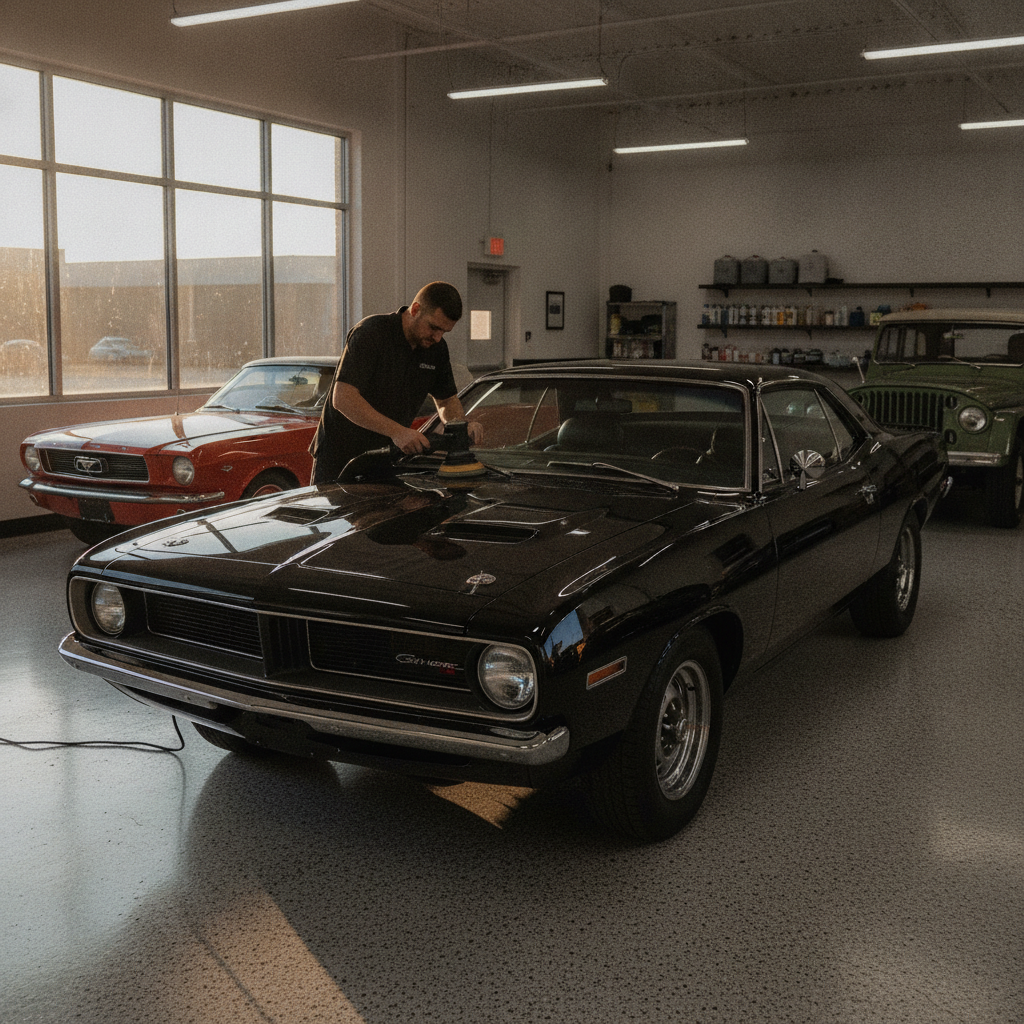
What’s the Best Way to Detail and Protect a Classic Car in Plymouth or Northville Before Selling It — Without Killing Its Value?
If you’re getting ready to sell a classic car in Plymouth, Northville, or anywhere in the Metro Detroit area, the way you present that vehicle will directly affect what a serious buyer is willing to pay — and how quickly a deal closes. A professional detail done right can add real dollars to your asking price. But the wrong approach — aggressive polishing on original paint, masking over genuine patina, or an overly dressed interior that signals cover-up — can actually raise red flags with knowledgeable collectors. The answer isn’t to do nothing or to go overboard. It’s to do it precisely, with someone who understands both the detailing side and the collector car market.
Why Pre-Sale Detailing on a Classic Car Is Different From Detailing a Daily Driver
When you bring a daily driver in for a full detail before selling it, the goal is usually simple: make it look as clean and presentable as possible. On a collector vehicle, the calculus is more nuanced. Buyers in this space — whether they’re from Canton or Farmington Hills or flying in from out of state — are paying close attention. They’re looking at panel gaps, checking paint thickness readings, and evaluating whether the presentation is honest or cosmetically manipulated.
This is where a detail shop that handles high-value and classic vehicles operates differently from a generic quick-lube detail bay. At Specialized Automotive in Livonia, Nate built his hands-on experience preparing classic and performance vehicles at a respected Metro Detroit collector-car dealership before founding the business in 2022. That background shapes how pre-sale prep gets handled here: the focus is on cleaning and presenting the vehicle accurately and compellingly — not disguising its history.
The goal with a pre-sale classic car detail is to remove everything that shouldn’t be there — road film, old wax buildup, surface contamination, interior dust and odor — while preserving everything that should be. Original paint with honest, well-maintained character reads very differently to a serious buyer than paint that’s been heavily cut or chemically corrected into something it wasn’t.
What a Pre-Sale Classic Car Detail Actually Involves
A well-executed pre-sale detail on a classic car typically starts with a careful exterior wash using pH-neutral products safe for older finishes, followed by a clay bar decontamination to pull embedded surface contamination that a wash alone won’t remove. From there, the decision about paint correction — if any — needs to be made deliberately.
Light swirl removal or a single-stage polish on a car with original paint can improve clarity and depth without removing significant paint thickness. But aggressive multi-stage correction on a vehicle with thin or fragile original lacquer or enamel is a different conversation entirely — and one that needs to be had before a buffer ever touches the panel. If the paint is original and still solid, the right move is often to enhance it gently and protect it, not to chase perfection that could cost you authenticity in the buyer’s eyes.
Interior work on a pre-sale classic usually means a thorough vacuum, careful cleaning of period-correct upholstery and trim with products appropriate for the materials (vinyl, leather, cloth, carpet — each handled differently), and odor neutralization without heavy fragrance masking. Old musty smells in a car that’s been stored tell a story a buyer is going to ask about anyway. Cleaning honestly is better than spraying something over it.
Engine bay cleaning is another area worth discussing with your detailer before the work starts. A cleaned engine bay can absolutely help presentation, but the approach matters. A careful, low-pressure hand detail is very different from blasting an old engine bay with a pressure washer and dressing everything to a shine — the latter can loosen old wiring and actually raise concerns about what’s being hidden.
Should You Ceramic Coat a Classic Car You’re About to Sell?
This is a question that comes up more often than you’d expect, and the answer depends on what kind of vehicle you’re selling and to whom. For a driver-quality classic or a restomod that’s already had paintwork done, a professional ceramic coating can be a legitimate selling point — it signals that the car has been recently protected and maintained, and it gives a buyer peace of mind going forward. For a numbers-matching, original-paint vehicle going to a serious collector, the calculus is different. Some buyers will appreciate the protection; others will want to make that call themselves. It’s worth a conversation with your detailer and, honestly, with whoever is helping you market the car.
The Gap Most Local Competitors Don’t Address: Paint Correction Risk on Collector Paint
Here’s something that’s almost entirely absent from the content put out by most Metro Detroit detailing operations: an honest discussion of when paint correction is the wrong choice. Most shops talk about paint correction as a universal good — remove swirls, restore clarity, make it look new. And on a modern daily driver with a thick factory clear coat, that’s often exactly right.
On a 1960s or 1970s vehicle with single-stage lacquer or enamel — the kind of car you’ll find in garages across Northville, Plymouth, and Oakland County — aggressive polishing can permanently thin an irreplaceable original finish. A few passes with the wrong pad and compound on a 50-year-old paint job can cross a line you can’t uncross. The right paint correction professional knows where that line is, checks paint thickness before making any decision, and communicates the risk to you clearly before touching anything. If a shop doesn’t mention paint thickness gauges when you’re talking about correcting a classic, that’s a problem.
Timing: When to Detail Before You List
Ideally, you want the detail completed close enough to when you’re listing the vehicle that it’s still presenting well when buyers come to look — but not so rushed that the work is done under pressure. For most classic car sellers in the Livonia area, a week to two weeks before serious showings or photography is a reasonable target. If you’re storing the car between the detail and the sale, keeping it indoors in a clean, climate-controlled environment protects the work. Specialized Automotive’s indoor storage facility, right off the I-275 / M-14 and I-96 interchange, can handle exactly that situation for owners who need the car kept in ready-to-show condition while the sale process plays out.
Frequently Asked Questions
Can detailing actually increase what I get for a classic car?
Yes — in most cases, a well-executed professional detail improves buyer perception and supports a stronger asking price. A car that’s clean, honest-looking, and properly presented closes faster and with less negotiation than one that shows up dirty or over-dressed. The return on a quality detail is almost always positive relative to its cost.
What if my classic car has original paint with some oxidation — should I have it corrected?
It depends on the severity and the buyer audience. Light oxidation that cleans up with a gentle polish is usually worth addressing. Heavy oxidation on thin original paint is a more complicated call — the right detailer will assess paint thickness and discuss realistic outcomes with you before doing anything. On a collector car, preserving original paint often matters more than making it look freshly restored.
How long does a pre-sale detail on a classic car typically take?
A thorough exterior and interior detail on a classic car usually takes anywhere from four to eight hours depending on the vehicle’s condition, size, and what’s needed. If any paint correction work is involved, plan for additional time. Rushing the job on a collector vehicle is never the right call.
Do you work on classic cars from the Plymouth and Northville area?
Absolutely. Specialized Automotive serves the entire Metro Detroit corridor, including Plymouth, Northville, Novi, Canton, Farmington Hills, and Wayne and Oakland County broadly. The shop is located in Livonia off the I-275 / M-14 interchange — easy access from all of those areas.
Should I mention the detail in my listing?
Yes — and if ceramic coating was applied, definitely note it. Buyers appreciate knowing that a car has been recently and professionally serviced. It signals care and attention, which is exactly what a serious collector buyer wants to see from a seller.
Ready to Prep Your Classic Car the Right Way?
If you’re getting ready to sell a classic, collector, or specialty vehicle in Plymouth, Northville, Livonia, or anywhere in Metro Detroit, the prep work you do now sets the tone for the entire transaction. Specialized Automotive handles pre-sale detailing and paint correction with the same precision and care that goes into every vehicle we touch — whether it’s a rare numbers-matching muscle car or a well-loved driver that deserves an honest, thorough clean before it finds its next owner.
Appointments are available seven days a week. The shop is insured and every job comes with a satisfaction guarantee. Reach out to Specialized Automotive here to talk through what your vehicle needs and get scheduled before your listing goes live.