
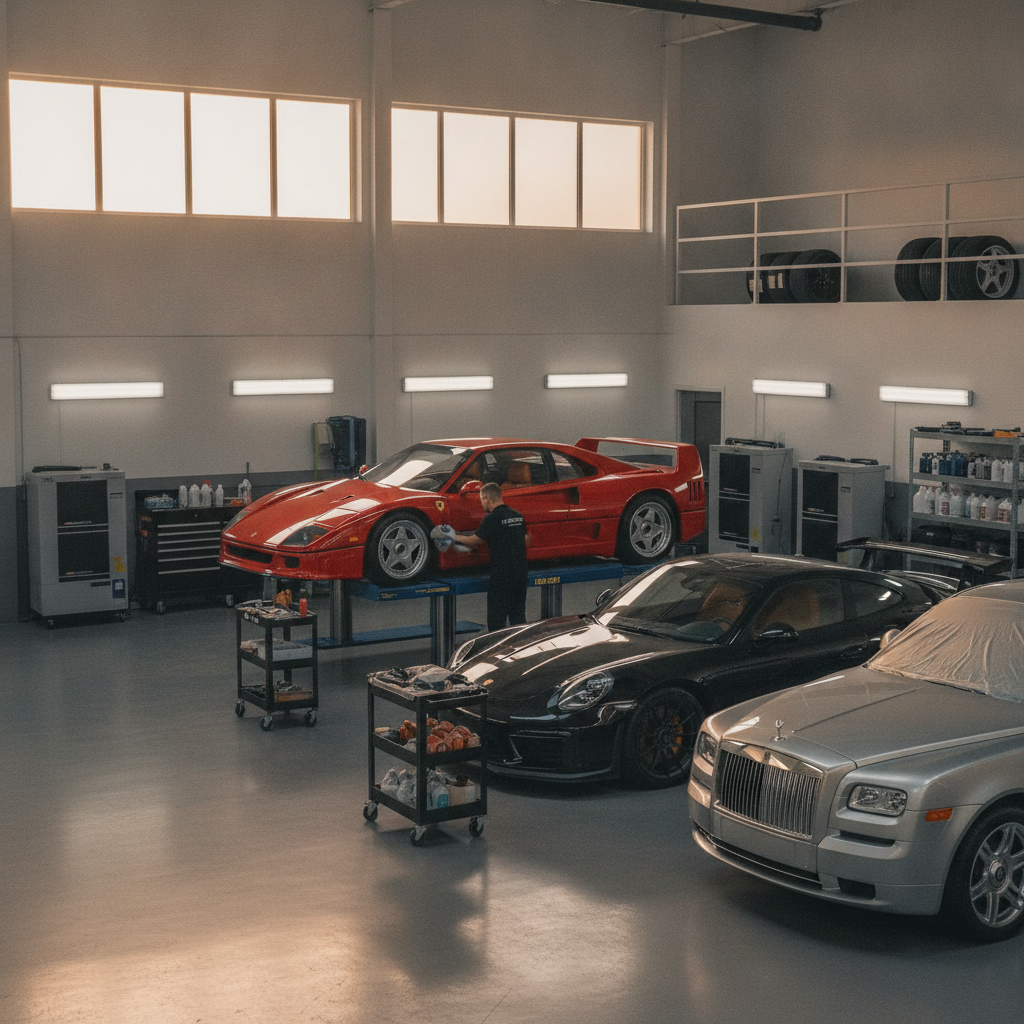
What’s the Best Way to Prep and Store a High-Value Vehicle for a Michigan Winter — And What Novi and Farmington Hills Owners Often Overlook Before Drop-Off?
The short answer: proper winter prep for a high-value vehicle isn’t just about finding a dry place to park it. If you own a collector car, an exotic, or even a well-maintained luxury vehicle in Novi, Farmington Hills, or anywhere across Oakland County, there’s a specific sequence of steps you need to complete before that vehicle goes away for the season — and skipping even one of them can lead to real, expensive problems by spring. Storage without preparation is just delayed neglect.
At Specialized Automotive in Livonia, we’ve seen what Michigan winters do to vehicles that weren’t properly prepped before storage. Moisture trapped under a car cover. Road salt residue left on paint and underneath the vehicle all winter. Interior materials deteriorating in fluctuating humidity. These aren’t hypothetical risks — they’re the kinds of issues we see come through the shop every March and April when owners pull their cars out and realize something went wrong over the winter.
Why Michigan Winters Demand More Than Just Parking the Car
Metro Detroit winters are genuinely hard on vehicles. Freeze-thaw cycles, road salt, road brine, and months of humidity fluctuation create conditions that can accelerate corrosion, crack rubber seals, and degrade paint surfaces that seemed perfectly fine in October. For a collector car or exotic sitting unprotected — even indoors — those months represent compounding risk.
The problem isn’t usually the cold itself. It’s what’s already on the vehicle when it goes into storage, and the conditions it sits in once it’s there. A car parked in a damp, uninsulated space with road salt residue still embedded in the undercarriage and wheel wells is going to come out looking and feeling worse than when it went in. That’s true whether the vehicle is a numbers-matching muscle car from Northville or a current-model-year European sports car from Bloomfield Hills.
Climate-controlled, secured indoor storage addresses the environment. But the prep work — the detailing, paint protection, and mechanical steps completed before drop-off — determines what that environment is actually protecting.
The Pre-Storage Detail: What It Actually Involves and Why It Matters
A pre-storage detail isn’t the same as a routine maintenance wash. It’s a more deliberate process, and when done correctly, it addresses the specific vulnerabilities that emerge during long-term storage.
Here’s what thorough pre-storage prep looks like for a high-value vehicle:
- Full exterior decontamination: Iron fallout, tar, and embedded road grime need to come off the paint before storage. Contaminants left on the surface for months can permanently bond to clear coat. This step is often skipped entirely when owners do a quick DIY wash before drop-off.
- Undercarriage cleaning: If your vehicle was driven on Michigan roads at any point in the last season, there’s a reasonable chance road salt brine is sitting in the undercarriage, wheel wells, and suspension components. That needs to come off. Storing a vehicle with salt contamination underneath it is how corrosion starts.
- Paint protection application or inspection: If the vehicle already has a ceramic coating, it should be inspected and properly topped before storage. If it doesn’t have long-term paint protection in place, applying a quality sealant before storage provides a meaningful barrier against humidity and condensation over winter.
- Interior detailing and conditioning: Leather, vinyl, and rubber surfaces are especially vulnerable to cracking and deterioration in fluctuating humidity. Conditioning before storage gives those materials a better chance of coming out in the same condition they went in.
- Glass and rubber seals: Cleaning and treating door seals and window trim before storage helps prevent them from drying out or sticking over months of disuse.
When you sign up for winter or year-round storage at Specialized Automotive, a full interior and exterior detail is included with your storage plan — so this prep isn’t an additional line item. It’s part of the process.
What Most Storage-Only Facilities Near Novi and Farmington Hills Don’t Tell You
This is the gap that most storage providers in the area — and most of the competitor sites we’ve seen — don’t adequately address: storage and preparation are two completely different services, and very few facilities offer both with the same level of expertise.
A lot of storage-only operations near Plymouth, Novi, and Farmington Hills will accept your vehicle and park it. They’ll give you a bay number and a lock code. What they won’t do is inspect the paint, clean the undercarriage, condition the interior, or tell you that the road salt you drove through two days ago is still sitting in the wheel wells. That’s not a knock on storage facilities — it’s just not what they do.
At Specialized Automotive, the storage side and the detailing side are the same operation. The person evaluating the prep work on your vehicle before it goes in is the same person responsible for how it comes out. That continuity matters, especially for collector and exotic vehicles where the details — a scratch that wasn’t there before, a leather seat that cracked over winter — are immediately noticeable.
Our classic, exotic, and luxury car storage facility is climate-controlled, secured, and located just off the I-275 / M-14 interchange in Livonia — convenient for owners coming from across Oakland County, Wayne County, and the broader Metro Detroit area.
Paint Protection Before Storage: Where Ceramic Coating Fits In
If your vehicle doesn’t have a ceramic coating and you’re planning to store it over winter, that’s actually a reasonable time to consider having one applied — specifically in the fall, before storage, rather than in the spring after the vehicle has already sat unprotected.
A properly applied ceramic coating provides a semi-permanent hydrophobic barrier that makes the vehicle significantly easier to maintain coming out of storage. Any moisture, dust, or surface contamination that accumulates over winter cleans off more easily from a coated surface than from bare clear coat or a degraded wax layer.
For vehicles that already have paint imperfections — swirl marks, light scratches, oxidation — a paint correction step should come before ceramic coating application. Coating over damaged paint doesn’t fix the damage; it locks it in. The right sequence is: thorough decontamination, paint correction where needed, then ceramic coating, then storage. If you’re curious about the prep process before coating, our paint correction service page has more detail on what that step involves.
FAQs: Winter Storage Prep for High-Value Vehicles in Novi, Farmington Hills, and Metro Detroit
How far in advance should I schedule pre-storage detailing and drop-off?
Ideally, 2–4 weeks before you want the vehicle in storage — especially if you’re combining paint correction and ceramic coating with the storage prep. Fall is a busy time, and trying to schedule everything in the last week of October usually means making compromises on timing or thoroughness.
Does a ceramic coating on my vehicle actually help during storage?
Yes, in practical terms. A ceramic coating provides a protective layer that resists humidity-related surface contamination and makes the post-storage detail faster and more thorough. It doesn’t eliminate the need for a pre-storage detail, but it does mean the vehicle comes out of storage in better shape than one that went in with bare paint.
What if my collector car hasn’t been properly detailed in years — is it too late to prep it for storage?
It’s never too late, but it may require more work upfront. Heavily oxidized or contaminated paint will need more intensive correction before protective coatings can be applied. The condition of the paint going in directly affects how it holds up over winter — so getting that work done before storage, not after, is the right call.
Do I need to do anything to the interior before long-term storage?
Yes. Leather and vinyl should be thoroughly cleaned and conditioned before storage. Leaving food debris, moisture, or surface grime in an interior for months — even in a climate-controlled environment — can result in odors, mold growth, and material deterioration. A thorough interior detail before drop-off is not optional for a high-value vehicle.
Is your storage facility accessible if I need to check on the vehicle during winter?
Yes. Specialized Automotive is located in Livonia near the I-275 / M-14 and I-96 interchange, and we’re available seven days a week. If you need to access your vehicle, inspect it, or retrieve something from it during the storage period, that’s not a problem.
Get Your Vehicle Ready for Winter Storage the Right Way
If you own a collector car, exotic, or luxury vehicle in Novi, Farmington Hills, Plymouth, Bloomfield Hills, or anywhere in the Metro Detroit area, don’t leave winter prep to chance. The combination of professional pre-storage detailing and secure, climate-controlled indoor storage is what actually protects your investment through a Michigan winter — not just finding somewhere dry to park it.
Specialized Automotive handles both under one roof, and every storage sign-up includes a full interior and exterior detail as part of the package. Appointments are available seven days a week, and we’re fully insured.
Ready to schedule? Contact Specialized Automotive to discuss your vehicle, your timeline, and what pre-storage prep makes sense for what you own. We’ll give you a straight answer — no pressure, no generic sales pitch.