
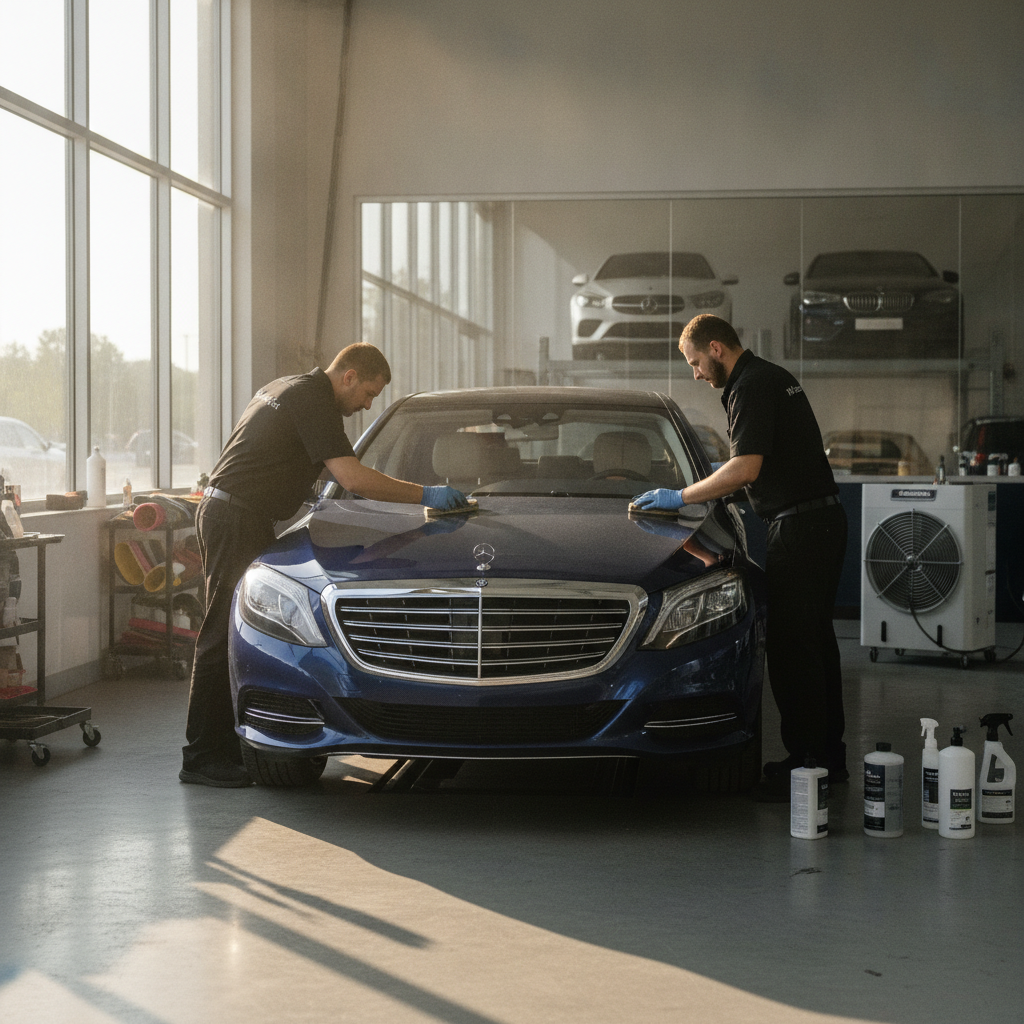
Is Your Car Ready for a Michigan Summer? What Southfield and Farmington Hills Owners Should Do Before the Heat Hits
Yes — and if you’re waiting until June to think about it, you’re already behind. Michigan summers don’t ease in gently. Between intense UV exposure baking paint and dashboards, humidity working into every surface that winter left compromised, and the tar and road debris that comes with warmer pavement, your vehicle takes a different kind of beating from May through September than it does in winter. For owners in Southfield, Farmington Hills, and across Oakland County, the transition from road-salt season to summer sun is the most important time of year to take a hard look at your paint, your interior, and your protection strategy — before the damage has a chance to compound.
Why the Post-Winter Window Matters So Much
Here’s what most generic detailing content misses: the real threat in early summer isn’t the heat itself — it’s the condition your paint and surfaces are already in when the heat arrives. A Michigan winter leaves behind more than visible road grime. Salt residue works into porous paint, clear coat, and trim over months of freeze-thaw cycling. By the time temperatures climb and UV intensity peaks, any existing scratches, swirl marks, or compromised clear coat become accelerants for further oxidation and fading.
If you drive anything in Southfield or Farmington Hills — a daily commuter, a weekend car, a truck, a collector car you just pulled out of storage — summer prep starts with an honest assessment of what winter actually did to your paint. Not just whether it looks clean, but whether the surface is truly protected and intact. That’s a different question, and it requires a different answer than a touchless car wash can provide.
Step One: A Proper Post-Winter Detail — Not Just a Wash
The first thing your vehicle needs after Michigan winter is a thorough decontamination detail, not a rinse. This means iron fallout removal, clay bar decontamination to pull embedded road salt and industrial particles from the paint surface, and a full undercarriage flush. Winter grime that’s been baking under your wheel wells since February doesn’t come off with a pressure washer pass at a coin-op. It needs deliberate chemical and mechanical decontamination to be fully removed.
At Specialized Automotive in Livonia, post-winter detailing isn’t a upsell — it’s the starting point for everything that comes after. You can’t assess what your paint actually needs until the surface is genuinely clean. And you certainly can’t apply a meaningful protective coating over contaminated paint and expect it to bond or perform correctly.
Step Two: Assess Whether Your Paint Needs Correction Before Summer
Once the surface is clean, you can actually see what you’re working with. For a lot of vehicles that spent the last four or five months driving on salted roads in Wayne County and Oakland County, the story isn’t pretty. Swirl marks from winter washes, light scratches from snow brushes, and the early stages of oxidation on older clear coat are all common findings.
If your paint shows any of these issues, addressing them now — before summer UV exposure has months to work — is the smarter and more cost-effective move. Paint correction removes those defects at the surface level, restoring clarity and gloss before you apply any protection. Skipping correction and going straight to a wax or sealant just locks the damage in place. The paint still looks compromised — it’s just sealed that way.
This step is especially relevant for anyone in Northville or Novi driving a vehicle with original or single-stage paint, where oxidation can accelerate dramatically under extended summer sun.
Step Three: Protection That Actually Holds Up Through a Michigan Summer
Here’s where the conversation most competitors skip entirely: not all paint protection is built for what Michigan summers actually deliver. A carnauba wax applied in April is largely gone by July. Even quality paint sealants have limits when you’re parking in direct sun for eight or nine hours a day during a Metro Detroit August.
Ceramic coating is the only protection layer that’s genuinely designed to withstand both extremes of the Michigan climate — road salt in winter and sustained UV exposure in summer. A properly applied ceramic coating chemically bonds to your clear coat, creating a semi-permanent layer that repels water, resists UV oxidation, and makes routine maintenance dramatically easier. It also doesn’t require reapplication every season, which is exactly why owners across Farmington Hills and Southfield are moving toward it as a long-term alternative to annual waxing.
The caveat — and this is one most spray-and-go detail shops won’t tell you — is that ceramic coating requires clean, corrected paint to perform as intended. You cannot shortcut the prep and expect the coating to compensate. Done right, it’s one of the most durable investments you can make in your vehicle’s finish. Done on contaminated or defect-ridden paint, you’ve just sealed in the problem permanently.
Interior Prep: The Part Summer Car Prep Articles Almost Always Get Wrong
Most summer car prep content focuses entirely on the exterior. But if you’ve ever come back to a car that’s been sitting in a Southfield parking lot in July, you already know what heat does to an unprotected interior. Dashboards crack. Leather dries out, fades, and eventually splits. Plastics off-gas and leave that hazy film on the inside of your windshield that’s genuinely miserable to deal with. Fabric seats that weren’t properly cleaned after winter hold salt residue that continues to degrade fibers through the summer.
A proper summer interior prep involves deep cleaning every surface — seats, carpet, door panels, headliner — followed by appropriate conditioning and protection for leather and vinyl. It also means addressing any odors that became embedded in the cabin over a sealed-up winter. This isn’t a ten-minute vacuum and a dashboard wipe. It’s a thorough process that takes time and the right products for each surface type.
What About Collector Cars Coming Out of Storage?
If you have a classic, exotic, or weekend car that just came out of off-season storage in the Livonia or Northville area, summer prep has an additional layer. A vehicle that’s been sitting — even in a climate-controlled facility — needs a careful inspection of the paint and surfaces before it goes back into regular driving and sun exposure. Any minor surface issues that developed during storage are far easier and less expensive to address now than after a full summer of UV exposure has had time to work on them.
At Specialized Automotive, we work with collector car owners across Oakland and Wayne County on exactly this kind of seasonal transition — both the spring-out preparation and the fall storage prep that protects the vehicle through winter.
Frequently Asked Questions
When’s the best time to do a summer prep detail in the Southfield or Farmington Hills area?
Ideally April or early May — before UV intensity peaks and before you’ve had weeks of warm-weather driving layering new contaminants onto a surface that still has winter residue in it. The earlier you address it, the less correction work is typically needed.
Does ceramic coating actually protect against Michigan summer UV exposure?
Yes, more effectively than any wax or sealant. A properly applied ceramic coating blocks UV radiation from reaching the clear coat, which significantly slows oxidation and color fading. It’s the most durable UV defense available for automotive paint.
Do I need paint correction if my car just looks a little dull — not scratched?
Dullness in clear coat is usually the early stage of oxidation or surface-level marring — both of which are exactly what paint correction addresses. If you’re planning to apply a ceramic coating, correction is essential. If you’re not, it’s still worth doing before summer accelerates the degradation further.
Can you detail motorcycles for summer prep, not just cars?
Absolutely. Motorcycles need the same post-winter decontamination and protection attention as cars — chrome, painted fairings, and exposed metal are all vulnerable to UV and heat. Specialized Automotive handles motorcycle detailing with the same precision standard applied to every other vehicle type.
Is there a benefit to doing summer prep even if my car isn’t that old?
Yes. Newer vehicles with factory paint are not immune to UV damage or summer heat — they’re just starting from a better baseline. Getting ahead of the damage curve with proper protection in year one or two is dramatically less expensive than addressing oxidation or interior degradation later. Prevention is always the better investment.
Ready to Get Your Vehicle Prepped for Summer?
Specialized Automotive is located off the I-275 / M-14 and I-96 interchange in Livonia, making it an easy stop for owners coming from Southfield, Farmington Hills, Novi, Northville, and across Wayne and Oakland County. We’re open seven days a week, fully insured, and built on one principle: every vehicle — whether it’s a daily driver or a rare collectible — deserves the same level of care and precision. If you want to talk through what your vehicle actually needs going into summer, reach out and book a consultation. No pressure, no generic package upsell — just an honest assessment of what your paint and interior need before the heat does the deciding for you.