
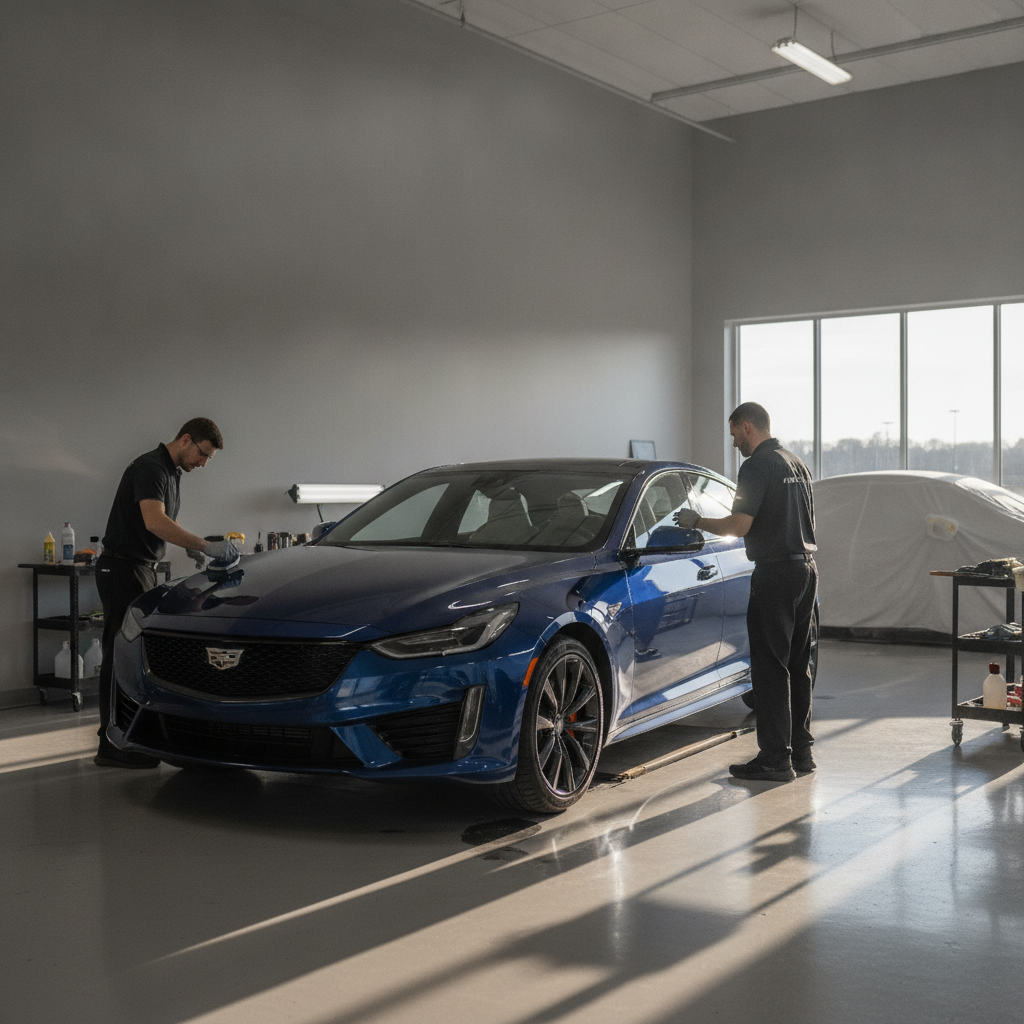
When Is the Right Time to Ceramic Coat a Brand-New Car — And What Northville and Plymouth Owners Should Do First
The best time to ceramic coat a brand-new vehicle is as soon as possible after taking delivery — but not before a proper paint inspection and, in most cases, at least a light decontamination or paint correction pass. If you just picked up a new car in Northville, Plymouth, or anywhere else in the Metro Detroit area and you’re thinking about long-term paint protection, the window you’re in right now is actually the most important one. What you do — or don’t do — in the first few weeks after delivery sets the condition of that paint for the life of the vehicle.
The Myth of “Factory-Protected” New Car Paint
Here’s something most dealerships won’t tell you: new car paint is not protected. The clear coat your vehicle left the factory with is designed to look good, not to resist the road. There’s no wax, no sealant, and certainly no ceramic coating sitting on top of it unless you specifically paid for one — and dealership-applied “paint protection” packages are largely overpriced sealants that last a few months at most.
By the time that new car reaches the lot in Livonia or gets transported to a dealership in Canton or Farmington Hills, the paint has already been exposed to rail dust from transport, automated brushes during prep washes, and handling that leaves light contamination embedded in the clear coat. That’s not a worst-case scenario — that’s routine. The paint looks immaculate under showroom lighting because showroom lighting is designed to hide defects, not reveal them.
What this means practically: you can’t just drive a new car home and assume the paint is ready for a ceramic coating. The surface needs to be properly assessed first.
Why Timing Actually Matters for Ceramic Coating a New Vehicle
The longer you wait to protect new paint, the more exposure accumulates. In Michigan specifically, that exposure is aggressive. Intense summer UV degrades unprotected clear coat faster than most owners realize, and if you’re picking up a new vehicle in the spring or summer — which many people do — you’re heading into peak UV season without any real protection in place.
Then there’s contamination. Every drive lays down a fresh layer of brake dust, road grime, and industrial fallout on unprotected paint. In Metro Detroit, that contamination is heavier than average thanks to traffic density, road construction, and the general industrial air quality of the region. Each layer that bonds to bare clear coat makes the prep work before coating more involved — and more time-consuming.
The practical answer: get the coating done within the first four to eight weeks of ownership. Don’t wait until the first Michigan winter arrives and then try to rush the process. Road salt and a fresh ceramic coating do not mix during application or cure — and trying to coat a vehicle in the middle of a Livonia January is a scheduling and conditions problem you don’t want to deal with.
Does a Brand-New Car Still Need Paint Correction Before Coating?
This is the question most competitors in this area don’t answer clearly — and it’s the right one to ask. The honest answer is: it depends on the paint, and you need someone who will actually look at the car under proper lighting before giving you a definitive answer.
Some brand-new vehicles come off the transport with genuinely clean, defect-free paint. A thorough decontamination wash, clay bar treatment, and panel wipe-down may be all that’s needed before a ceramic coating goes on. Other vehicles — even expensive ones — arrive with buffer trails from a careless dealer prep tech, light scratches from an automated wash, or micro-marring that’s invisible until you put a paint inspection light on the surface at the right angle.
Coating over defects locks them in. That’s not a scare tactic — it’s just how ceramic coatings work. They bond to the clear coat and harden. Whatever is underneath is preserved exactly as-is. If there are swirl marks in the paint when the coating goes on, those swirl marks will be there when the coating eventually comes off years later. A proper paint correction before coating isn’t always a major multi-stage process on a new vehicle, but it needs to be assessed honestly rather than skipped automatically.
What to Expect: The Process for Coating a New Car in Livonia
At Specialized Automotive, coating a brand-new vehicle follows a specific sequence regardless of how perfect the paint looks at first glance:
- Full paint inspection under controlled lighting — checking for transport damage, dealer prep defects, and surface contamination before anything else.
- Decontamination wash and clay bar treatment — removing bonded contamination that a standard wash won’t touch, including rail dust and industrial fallout from transport and lot time.
- Paint correction as needed — ranging from a single light polishing pass to address minor swirling, up to more involved correction if the inspection reveals heavier defects.
- Panel wipe-down and surface prep — ensuring the clear coat is chemically clean and ready to accept a coating with proper adhesion.
- Ceramic coating application — single-layer or multi-layer depending on the level of protection you want and the vehicle type.
- Cure time and inspection — proper cure requires controlled conditions and can’t be rushed.
The full process typically takes one to three days depending on paint condition and coating layers. It’s not a same-day drop-off-and-pickup service if it’s being done correctly.
Single-Layer vs. Multi-Layer Coating on a New Car — What’s Worth It
For a daily driver being picked up new in Northville or Plymouth, a single-layer professional-grade ceramic coating delivers meaningful protection — UV resistance, hydrophobic behavior, and a harder surface than bare clear coat — at a lower entry cost than a multi-layer system. For a vehicle you’re treating as a longer-term asset, a collector car, or a higher-end model where resale value matters significantly, a multi-layer coating offers greater depth of protection and longer service life before a maintenance coat is needed.
A reputable detailer will walk you through this honestly based on how you’re actually going to use the vehicle — not upsell you on layers you don’t need. Learn more about what’s available on our ceramic coating services page.
What About the Dealer’s “Paint Protection” Package?
If you’ve already purchased a dealership paint protection package, it doesn’t mean ceramic coating is off the table — it means the surface needs to be properly assessed before a professional coating goes on. Dealer-applied sealants are typically water-based products applied quickly by detailers working on volume. They’re not equivalent to a professionally applied ceramic coating, and in many cases they can be removed as part of the prep process before a proper coating is applied.
If you’re a new car buyer in Novi, Canton, or Farmington Hills and the dealer is offering a protection package at closing, it’s worth knowing what you’re actually buying before you sign. A professional ceramic coating applied by a dedicated detailer is a different category of product and process.
Frequently Asked Questions
Can I ceramic coat a new car the same week I buy it?
Yes — and in most cases, that’s ideal. As long as the paint is properly inspected, decontaminated, and corrected if needed before the coating is applied, timing the coating immediately after purchase means your paint gets protected before it accumulates damage from road use, UV, or contamination.
Does new car paint need to “cure” before a ceramic coating is applied?
This is a common question based on older information. Modern factory paint is fully cured before the vehicle leaves the manufacturer. There is no 30- or 60-day waiting period required for ceramic coating on a new vehicle. That advice was relevant decades ago and doesn’t apply to current production cars.
How much does ceramic coating a new car cost in the Livonia area?
Pricing varies based on vehicle size, paint condition, and the coating system applied. For most passenger vehicles in Wayne County and the surrounding area, professional ceramic coating runs roughly $600 to $2,000 depending on prep requirements and layers. A paint inspection at Specialized Automotive will give you an accurate picture of what’s needed before any commitment. Visit our Wayne County pricing page for more context.
What if my new car already has light swirl marks from the dealer?
It happens more often than people expect. A light single-stage paint correction pass is typically all that’s needed to address dealer prep swirling on new paint — it’s not a major process, and it makes a real difference in the final result once the coating goes on top. We’ll identify any defects during the inspection phase before recommending a correction level.
Do you coat motorcycles and trucks the same way as passenger cars?
The process is adapted to the vehicle, but the standards don’t change. Ceramic coating on a new truck or a motorcycle starts with the same paint inspection, decontamination, and surface prep before anything is applied. The geometry and materials are different — the approach to doing it properly isn’t.
Ready to Protect Your New Vehicle the Right Way?
If you’ve recently taken delivery of a new car, truck, or motorcycle in Northville, Plymouth, Livonia, or anywhere in the surrounding Metro Detroit area, now is the time to get ahead of paint damage rather than react to it later. Specialized Automotive is located off the I-275 / M-14 and I-96 interchange in Livonia, open seven days a week, and built around the standard that every vehicle — brand-new or years old — deserves the same precision care.
Reach out through our contact page to schedule a paint inspection and discuss what the right protection looks like for your specific vehicle. There’s no obligation — just an honest conversation between people who take this seriously.