
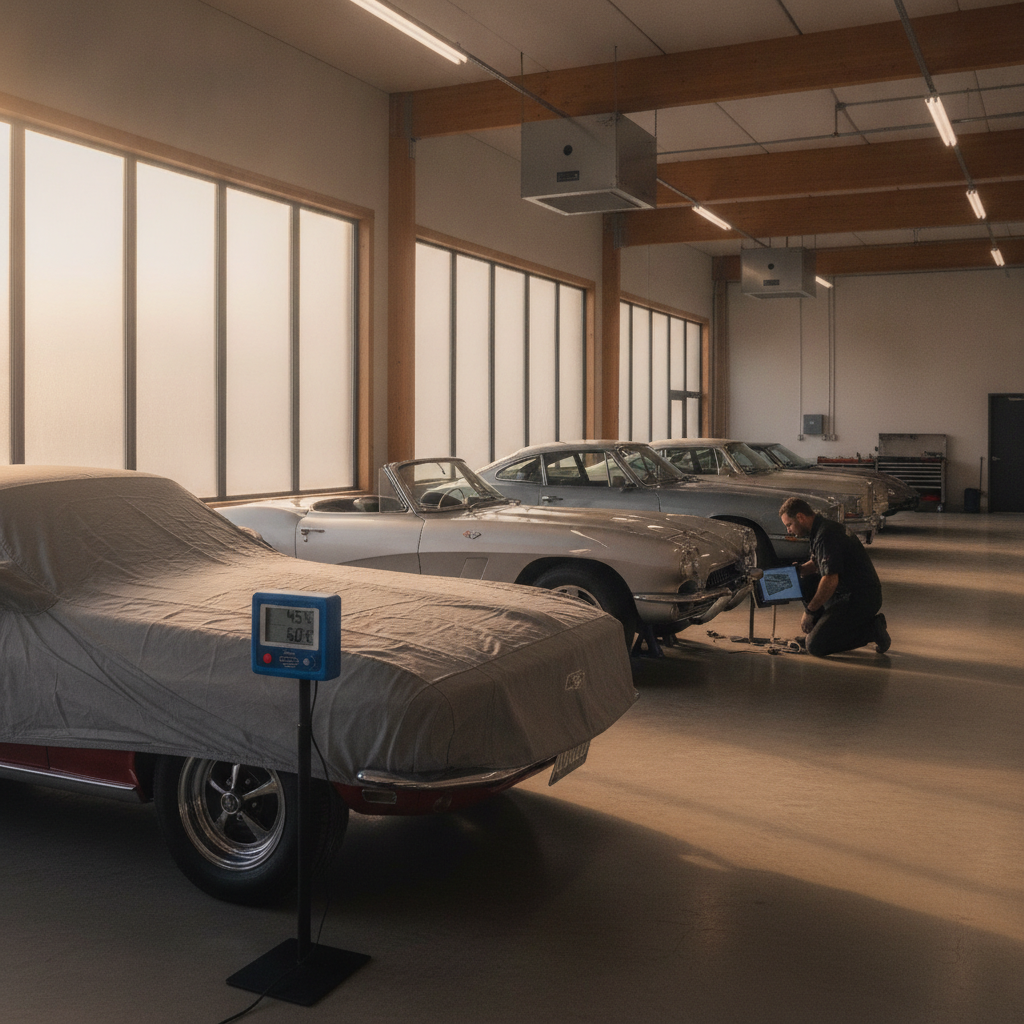
How Do You Store a Collector Car Over Winter in Novi or Farmington Hills Without Losing Track of Its Condition?
If you own a collector car in Novi, Farmington Hills, or anywhere across Oakland County, you already know the math: you’re not driving it on salted roads between November and April, so it needs to go somewhere safe for five or six months. The harder question — one that most storage facilities and even some detailing competitors in Metro Detroit don’t answer clearly — is what happens to your vehicle’s documented condition during that time. What did it look like going in? Who’s accountable for what it looks like coming out? That gap between dropping off the keys and picking them back up in spring is where a lot of collector car owners quietly lose confidence in whoever is holding their vehicle.
At Specialized Automotive in Livonia, we’ve built our storage program around the idea that handing over a valuable vehicle should never feel like a leap of faith. Here’s what condition tracking actually looks like, why it matters more than most storage providers acknowledge, and how to make sure your car comes back to you the same way it went in — or better.
Why Condition Documentation at Drop-Off Is Non-Negotiable
When you store a vehicle for five or six months, memories get blurry on both sides. That small scuff behind the passenger door — was it there when you dropped the car off, or did it happen in storage? Without a detailed condition record created at intake, there’s no honest answer to that question. For a daily driver, that ambiguity might be tolerable. For a numbers-matching muscle car, a vintage European GT, or a low-mileage exotic, it’s completely unacceptable.
A legitimate storage facility — one that takes collector vehicles seriously — should walk through the car with you at drop-off and create a written and photographic condition report. That means noting existing paint chips, swirl patterns, interior wear, fluid levels, tire condition, and any mechanical quirks you disclose. This isn’t bureaucratic paperwork. It’s the foundation of an accountable relationship between you and whoever is holding a vehicle that might be worth more than your mortgage.
Ask any storage provider directly: What is your intake process, and do I get a copy of the condition report? If they don’t have a clear answer, that tells you something important before you ever hand over the keys.
Climate Control Isn’t a Bonus Feature — It’s the Baseline for Michigan Winters
Michigan’s freeze-thaw cycles are genuinely brutal on stored vehicles. Even in a closed garage, temperature swings between January and March can cause condensation to form on paint, glass, and interior surfaces repeatedly over the course of a storage season. That moisture accelerates oxidation on unprotected metal, encourages mildew in upholstery and carpet, and can introduce surface rust in places you won’t notice until it’s already doing damage.
Climate-controlled storage — maintained at a consistent temperature and humidity level through the winter — eliminates that cycle. It’s not a premium upsell for paranoid collectors. For anyone storing a vehicle in the Novi or Farmington Hills area from November through April, it’s the minimum standard that actually protects the car. Unheated or unconditioned storage in a Michigan winter is just a slower version of leaving it outside.
Our facility near the I-275 / M-14 and I-96 interchange in Livonia is specifically designed for this environment — secured, indoor, and climate-managed year-round. That location also means owners coming from Northville, Plymouth, or Bloomfield Hills aren’t making a cross-county trek to check on their vehicles.
What Proper Pre-Storage Prep Actually Involves
Dropping a car into storage dirty is one of the most common — and most preventable — mistakes collector car owners make. Contaminants left on paint over winter don’t just sit there passively. Road film, bug residue, bird etching, and brake dust all continue to work into the clear coat and paint surface during storage, especially when temperature fluctuations cause the surface to expand and contract repeatedly.
Before any vehicle goes into our storage facility, we recommend — and include with year-round or winter storage sign-ups — a full interior and exterior detail. That means the car goes in clean, protected, and documented. Paint is inspected. Interiors are cleaned and conditioned so leather and vinyl don’t dry out over the storage period. Tires are properly inflated. If there’s existing paint damage that the owner wants to address before spring, that conversation happens now, not in April when you’re trying to get the car road-ready in a hurry.
If your paint has deeper issues — oxidation, swirl marks, or scratches that have been accumulating over several driving seasons — paint correction before storage is worth considering. Corrected, clean paint protected going into winter comes out of storage in significantly better shape than paint that went in with unaddressed damage.
The Specific Question Competitors Aren’t Answering: Who Checks on Your Car Mid-Storage?
Here’s the gap that most Metro Detroit storage providers — and the competing shops serving Novi, Farmington Hills, and surrounding Oakland County — don’t address publicly: what happens to your vehicle between drop-off and pickup? Is anyone walking through the facility regularly? Are tire pressures monitored? Is there a process for catching a slow leak or a developing fluid issue before it becomes a problem?
This is where passive storage facilities — places that are essentially climate-controlled parking structures — fall short for serious collector car owners. Storing a vehicle isn’t just about the environment it sits in. It’s about who is paying attention while it’s there. That means periodic walkarounds, checking that battery maintainers are functioning, verifying that nothing unexpected has developed on paint or under the vehicle, and being able to call the owner if something needs attention.
When you store a vehicle at Specialized Automotive, you’re not handing your car to a building — you’re working with Nate and a team that developed its approach to high-value vehicle care while handling classic and performance vehicles at one of Metro Detroit’s respected collector-car dealerships. That background shapes how we think about accountability, not just square footage and thermostat settings.
Spring Pickup: What You Should Expect When You Come Back for Your Car
Getting your collector car back in spring should feel like a confirmation, not a surprise inspection. When the storage period ends, you should be able to compare the vehicle’s current condition directly against the intake report and see that nothing has changed — or discuss anything that came up transparently during the storage period.
A spring detail or at minimum a thorough exterior wash is also the right way to start the driving season, removing any dust accumulation from storage and giving the paint a fresh inspection in full daylight before you take the car out. If the vehicle was detailed before storage, this is a lighter process. If it wasn’t, it becomes a more involved seasonal prep job that could have been avoided.
Frequently Asked Questions: Collector Car Winter Storage Near Novi and Farmington Hills
How early should I arrange winter storage for a collector car in Farmington Hills?
Storage slots at quality facilities near Metro Detroit fill up in September and early October. If your driving season typically ends by Halloween, you should be making storage arrangements by September at the latest. Waiting until the first hard frost means you’re often choosing between available options rather than the right option.
Do I need to do anything to prepare my car before dropping it off for storage?
We handle the detail as part of the storage intake process, but it’s worth disclosing any known mechanical issues, existing paint damage, or unusual fluid conditions before drop-off so they can be documented accurately. If you’re aware of something developing, storage is also a good time to have it assessed before spring.
Is climate-controlled storage worth the premium over a standard indoor facility near Novi or Farmington Hills?
For a collector, classic, or exotic vehicle — yes, without question. Michigan’s winter temperature swings create condensation and moisture cycles that unmanaged indoor storage doesn’t prevent. Climate control eliminates that risk entirely over a five- or six-month storage season.
Can I access my vehicle during the storage period?
Yes. We’re open seven days a week, and stored vehicle owners can arrange access to their vehicles. We’d just ask for advance notice so we can have your car accessible and ready when you arrive.
What’s included with a winter storage package at Specialized Automotive?
Year-round and winter storage sign-ups include a complimentary full interior and exterior detail, condition documentation at intake, and secure climate-controlled storage through the Michigan winter season. Contact us directly for current availability and pricing.
Ready to Store Your Collector Car the Right Way This Winter?
If you’re in Novi, Farmington Hills, Northville, Plymouth, or anywhere across Oakland County, Specialized Automotive offers collector car owners what most facilities in Metro Detroit can’t: storage that’s built around accountability, condition documentation, and the kind of attention a valuable vehicle actually deserves during six months off the road. We’re located conveniently near the I-275 / M-14 and I-96 corridor in Livonia, and we have availability for the upcoming storage season.
Don’t wait until October to figure out where your car is going. Contact Specialized Automotive today to discuss storage availability, ask about our storage and detailing bundles, or schedule a walk-through of the facility before you commit.