
How Do You Protect a Truck or SUV’s Paint and Interior When You’re Actually Using It Every Day in Canton or Wayne?
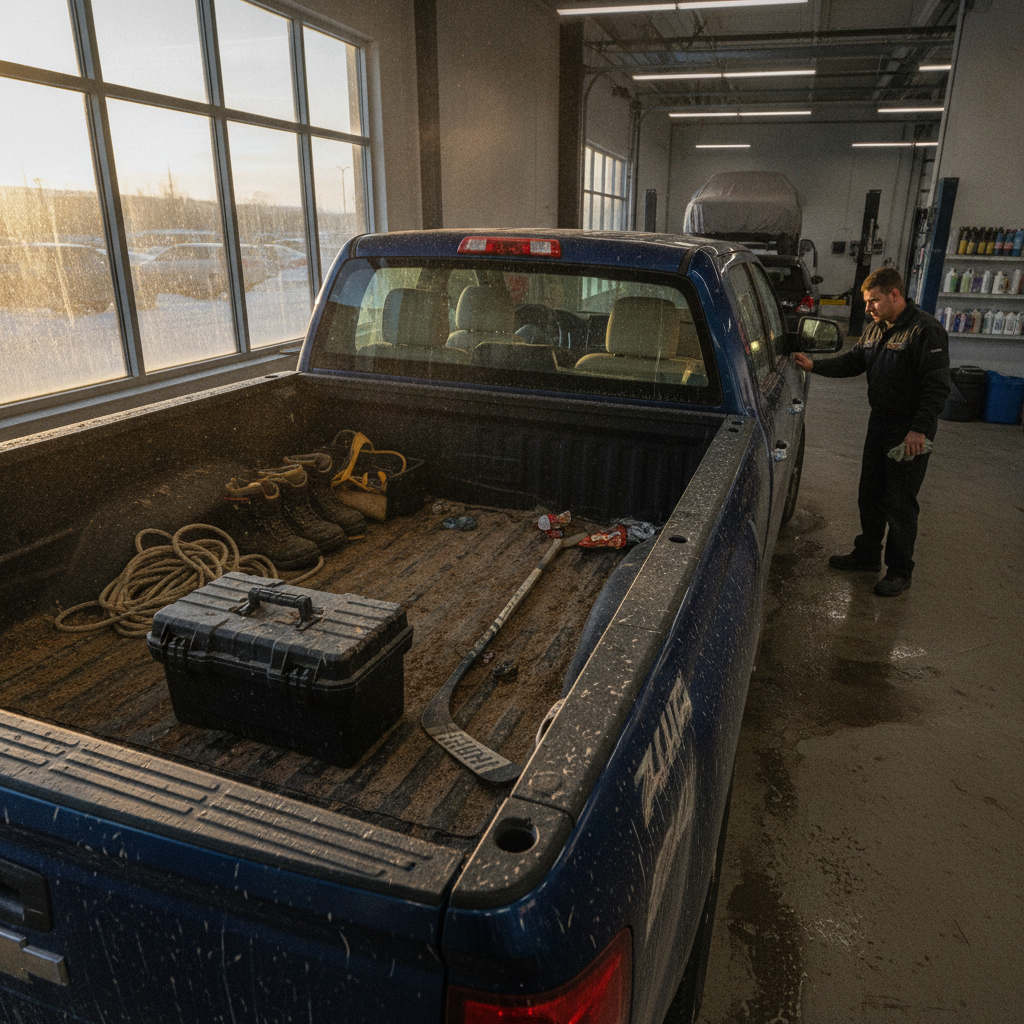
If your F-150, Silverado, Tahoe, or Wrangler is pulling double duty as a daily driver and a working vehicle — hauling materials, towing, loading gear over the tailgate, running kids to school, and grinding through Michigan winters — most detailing advice you’ll find online simply doesn’t apply to you. The content out there is written for weekend show cars or pristine leased crossovers, not for trucks and SUVs that actually get used. Owners in Canton and Wayne who want real protection for a vehicle that earns its keep need a different conversation than the one most detailers are having.
Here’s what actually matters when you’re protecting a high-use truck or SUV — and why doing it right from the start is a smarter investment than trying to repair the damage later.
Why Daily-Use Trucks and SUVs Are a Different Protection Problem
A truck or SUV that’s used daily in Wayne County faces compounding risks that a low-mileage collector car simply doesn’t. You’ve got road salt and brine accumulating on the lower panels and undercarriage from November through March. You’ve got UV exposure baking the hood and roof through summer, fading clear coat on dark-colored paint faster than most owners realize. And then there’s the physical abuse: grocery bags scraped across door sills, bike racks and trailer hitches contacting the bumper, cargo sliding around the bed or cargo area and grinding into the floor mat.
Most quick-service car washes and budget detail shops treat a truck the same way they treat a compact sedan. They run it through a process designed for volume, not for the specific vulnerabilities of a large, hard-working vehicle. That’s exactly where real detailing and protection diverge from what those operations offer.
The Case for Ceramic Coating on a Daily-Use Truck — Even If It’s Not Perfect
One of the most common hesitations we hear from truck and SUV owners is some version of: “It’s just a work truck — is ceramic coating really worth it?” The answer, in most cases, is yes — and often more so than on a weekend car that rarely leaves the garage.
Here’s the logic. A vehicle that’s driven daily in Michigan is exposed to road salt, industrial fallout, UV rays, and contaminants every single day. Without a proper protective layer, the clear coat is absorbing all of that directly. Ceramic coating creates a chemically bonded, semi-permanent barrier that makes decontamination dramatically easier, slows UV degradation, and gives you a surface that road salt can’t grip the same way bare paint can. That matters in January when you’re driving through Wayne County brine slicks regularly.
The coating doesn’t prevent stone chips or bed scratches — no coating does. But it significantly reduces the cumulative environmental damage that quietly destroys paint on high-use vehicles. Learn more about our ceramic coating process and what it involves at Specialized Automotive.
Paint that’s in rough shape first needs to be addressed before coating — which is why paint correction often comes before coating on vehicles that have been in service for a few years without protection. If your truck or SUV has swirl marks, oxidation patches, or water spot etching, those need to come out before a ceramic layer goes on top.
Interior Protection for Vehicles That Actually See Cargo, Mud, and Daily Wear
This is the section that most competitor detailing sites in this area skip almost entirely — and it’s one of the most practical protection questions truck and SUV owners have.
Interior surfaces on a working truck take punishment: mud tracked in from job sites or trails, pet hair ground into second-row seats, salt residue from boots soaking into carpet and floor mats all winter, coffee and food in the center console area, and UV fade on dashboards and door panels that face direct sunlight. In Plymouth and Canton, where a lot of families use a full-size truck or three-row SUV as their primary family vehicle, the interior takes every bit as much abuse as the exterior.
A professional interior detail on a truck or SUV isn’t just a wipe-down. It’s an extraction of salt residue from carpet and floor mats before it can cause long-term fiber damage. It’s conditioning leather seat bolsters that dry and crack from repeated entry and exit. It’s decontaminating headliners, cleaning rubber door seals, and treating plastics with UV protectants that actually prevent the chalking and fading you see on five-year-old dashboards left unprotected through Michigan summers.
If you use your vehicle year-round and you’re not doing a proper interior decontamination at least once in spring — after the salt season — you’re letting crystallized salt work on your carpet and upholstery for months.
What a Protection Plan for a High-Use Truck Actually Looks Like
There’s no single right answer, but here’s a practical framework for truck and SUV owners in Westland, Wayne, Canton, and the surrounding area who want real protection without over-engineering it:
- Starting point — full exterior and interior detail: Get the vehicle truly clean before anything else. Road film, salt residue, industrial fallout, and embedded grime need to come off first. This is the baseline, and it matters more on a high-use vehicle than on anything that sits in a garage.
- Paint correction if needed: If the paint has visible swirl marks, oxidation, or water etching, address that before applying any protection. Locking in damage under a ceramic coating defeats the purpose.
- Ceramic coating for the exterior: A properly applied ceramic coat on a daily-use truck will outperform any wax or sealant you could apply at home and hold up through Michigan winters significantly better. It makes ongoing maintenance washing easier and more effective.
- Interior fabric and leather protection: Professional-grade sealants applied to upholstery and carpet after a proper extraction provide meaningful resistance to staining and moisture absorption — not a magic shield, but a real improvement over bare fabric.
- Seasonal maintenance detail: Spring and fall detailing bookends the year well — spring gets the winter salt out, fall preps the vehicle for the next season. This is practical maintenance, not pampering.
See how Specialized Automotive approaches truck detailing and protection from the ground up.
What to Ask Before Booking a Truck or SUV Detail in the Livonia Area
Not every detail shop is set up to properly service a full-size truck or large SUV. Ask these questions before you commit:
- Do you use a dedicated truck or SUV process, or the same process as a sedan?
- What does your interior extraction process involve for salt-contaminated carpet?
- If I want ceramic coating, do you do paint correction first, or do you go straight to coating?
- Is your facility covered and secured, or are you detailing outdoors?
- Are you insured for the vehicles in your care?
At Specialized Automotive in Livonia, every vehicle — daily-use F-250 or weekend Porsche — gets the same precision care and the same honest assessment of what it needs. Nate built this business detailing and prepping high-value vehicles at a Metro Detroit collector-car dealership before starting Specialized Automotive in 2022. That background means the same standards that apply to a rare collector car apply to your truck.
Frequently Asked Questions: Truck and SUV Protection in Wayne County
Is ceramic coating worth it on a truck I use for work and towing?
Yes — possibly more so than on a vehicle that rarely sees heavy use. A working truck is exposed to salt, UV, and contaminants constantly. Ceramic coating reduces the rate of paint degradation and makes routine washing easier and more effective over time.
How often should I detail a truck or SUV I drive every day in Michigan?
At minimum, a thorough interior and exterior detail twice a year — once in spring to remove winter salt accumulation, once in fall before the next salt season begins. High-use vehicles or those with light-colored interiors benefit from quarterly attention.
Can you detail large trucks and three-row SUVs at Specialized Automotive?
Yes. Our Livonia facility is equipped to handle full-size trucks, lifted vehicles, and large three-row SUVs. We’re located near the I-275 / M-14 and I-96 interchange, which makes it a straightforward drive from Canton, Wayne, Westland, and Plymouth.
Does a ceramic coating protect against bed scratches or cargo damage?
No coating prevents mechanical impact damage from cargo, tools, or equipment. What ceramic coating does is protect against the chemical and environmental damage — road salt, UV, industrial fallout, bird acid — that accumulates on every surface of a vehicle driven in Michigan year-round.
What’s included in a professional interior detail for a truck or SUV with heavy use?
A proper interior detail includes hot-water extraction of carpet and upholstery, thorough door jamb and sill cleaning, leather or vinyl conditioning, treatment of plastics and trim, decontamination of headliner panels, and cleaning of all hard surfaces and cargo areas. It’s significantly more involved than a vacuum and wipe-down.
Get a Straight Answer on What Your Truck or SUV Actually Needs
If you’re in Canton, Wayne, Westland, Plymouth, or anywhere in Wayne County and you want an honest assessment of what protection and detailing would actually benefit your daily-use truck or SUV — without being sold services you don’t need — we’re ready to talk. Specialized Automotive is open seven days a week, fully insured, and every vehicle that comes through our doors gets treated with the same standard of care regardless of what it is or what it does every day.