
How Do You Know If Your Car’s Paint Is Actually Clean — Or Just Looks Clean After a Wash in Southfield or Redford?
Your car can look perfectly clean — freshly washed, water beading off the hood — and still have a paint surface covered in contaminants that are silently working against it. This is one of the most misunderstood aspects of vehicle care, and it’s especially relevant for drivers in Southfield, Redford, and the surrounding Wayne County area who deal with heavy traffic, industrial fallout, and the kind of road environment Metro Detroit is famous for. A wash removes surface dirt. It does not remove bonded contamination. And the difference between those two things is the difference between paint that stays protected and paint that slowly degrades.
What Does “Truly Clean” Paint Actually Mean?
When detailing professionals talk about paint cleanliness, they’re not talking about how the car looks under a sunny sky. They’re talking about the condition of the clear coat at a microscopic level. Road film washes away easily. What doesn’t wash away are the particles that have bonded to the clear coat itself — things like iron fallout from brake dust, industrial pollution, rail dust, tree sap residue, calcium deposits from hard water, and embedded road tar.
These contaminants don’t sit on top of your paint. Over time, they embed into the surface. They oxidize. Brake dust — which is everywhere on any vehicle that stops regularly — contains iron particles that heat up, cool down, and essentially fuse into the clear coat. If you’ve ever seen small orange or brown specks on a light-colored car that don’t wash off, that’s iron contamination. And it’s far more common than most vehicle owners realize.
The practical test: run a clean fingertip across your freshly washed paint. If it feels rough or gritty — like fine sandpaper — your paint is not truly clean. What you’re feeling is bonded contamination. A car with genuinely decontaminated paint feels glassy and slick.
Why This Matters More in the Metro Detroit Area
Michigan’s driving environment accelerates this problem. If you’re in Redford, you’re likely commuting on roads shared with heavy commercial traffic, and the brake dust generated by trucks and buses settles on every surface nearby. If you’re in Southfield, surface streets near I-696 and Greenfield Road carry significant industrial fallout from years of manufacturing activity in the region. Even if you don’t live near a factory, the sheer volume of vehicles on Metro Detroit roads means brake dust is a constant presence in the air.
Add Michigan winters into the equation — the road salt, the calcium chloride, the brine that gets kicked up onto the rocker panels and door edges — and you have an environment where paint contamination accumulates faster than it does almost anywhere else in the country. Washing your car regularly is the right instinct. But washing alone isn’t enough to undo what the road deposits on a daily basis.
The Contamination Your Car Wash Isn’t Removing
Most car washes — including touchless and hand-wash operations — are designed to remove loose surface dirt and road film. That’s their job, and they do it reasonably well. What they are not equipped to address:
- Bonded iron fallout — brake dust that has oxidized and embedded into the clear coat
- Industrial and rail dust — metallic particles that settle and bond through heat cycling
- Road tar and asphalt — sticky deposits that accumulate on lower body panels and wheel wells
- Water spot minerals — calcium and magnesium from hard water that etch into the surface over time
- Tree sap and organic residue — acidic compounds that begin degrading clear coat if left untreated
None of these respond to soap and water. Removing them requires either a chemical decontamination treatment — an iron remover that dissolves metallic particles — or a physical process like clay bar treatment that mechanically lifts bonded contamination from the surface. Frequently, both steps are needed together.
What a Professional Decontamination Process Actually Involves
This is where professional auto detailing creates real value that a self-serve wash or quick-detail spray simply can’t replicate. A proper paint decontamination process at a shop like Specialized Automotive includes:
- A thorough wash to remove loose contamination first
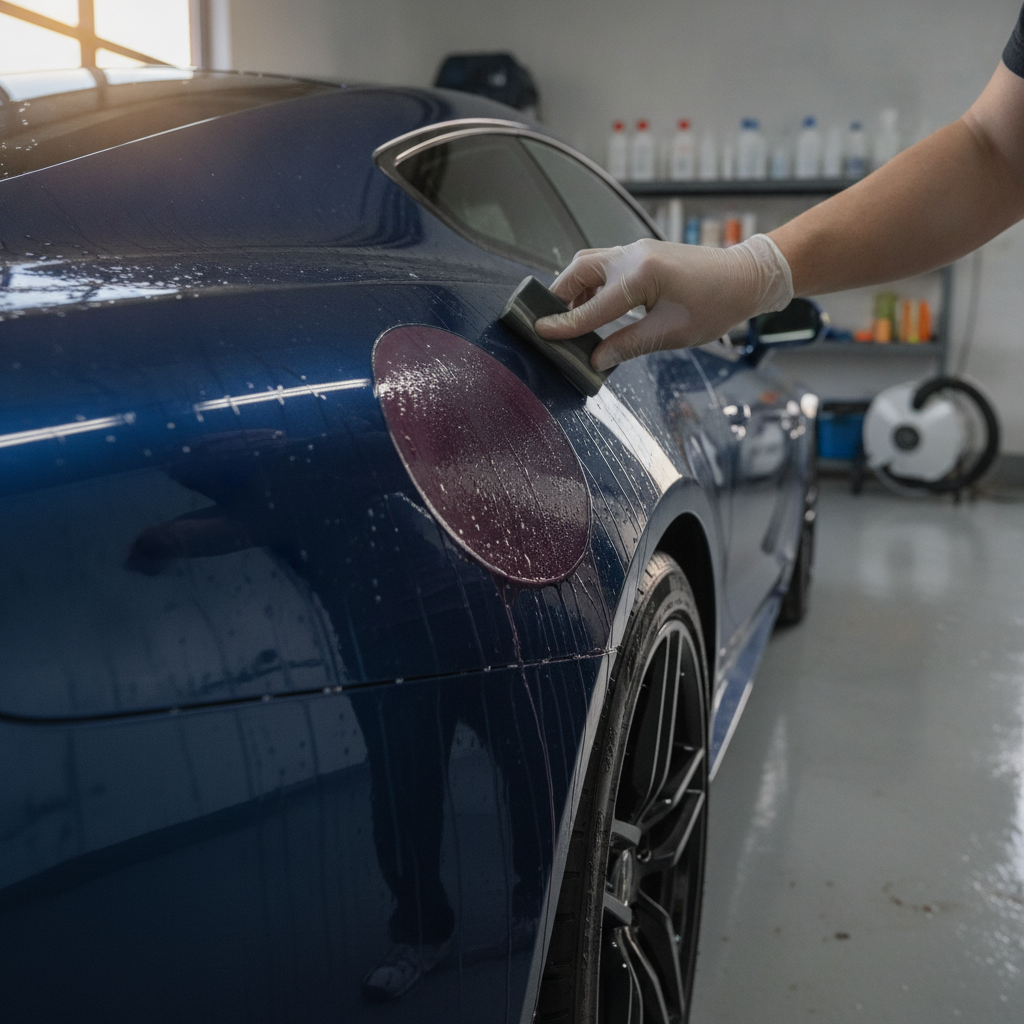
- A dedicated iron fallout remover applied panel by panel — you’ll often see it turn purple or red as it reacts with and dissolves metallic particles
- A tar and adhesive remover for lower panels and wheel arches
- Clay bar or clay mitt treatment across the entire paint surface to physically pull remaining bonded contamination free
- A post-clay panel wipe to inspect results and verify the surface is truly smooth
This process is also a required prerequisite for any proper ceramic coating application. Applying a coating over contaminated paint doesn’t protect the paint — it locks the contamination in. That’s one reason ceramic coating prep, done correctly, takes substantially more time than most vehicle owners expect.
What This Looks Like in Practice for Everyday Drivers
You don’t have to be a collector car owner or exotic car enthusiast for this to matter. If you’re a daily driver in Westland or Garden City putting regular miles on a commuter vehicle, paint contamination is building up every week. It’s not dramatic — it accumulates gradually, which is exactly why it goes unnoticed until the paint starts looking dull or rough, or until swirl marks become visible in direct sunlight.
For most daily drivers, a full decontamination once or twice a year — ideally in the spring after winter salt exposure and again in the fall before the next season — makes a meaningful difference in how the paint holds up. For collectors and enthusiasts who store their vehicles through the winter, decontamination should be part of the intake process before any storage begins.
The rough-fingertip test doesn’t lie. If your recently washed car still feels textured, the contamination is still there.
Frequently Asked Questions
How do I know if my paint needs decontamination?
Run a clean, dry fingertip across your paint right after a wash. If the surface feels rough or gritty rather than slick and glassy, you have bonded contamination. You may also notice a dull or hazy appearance even after washing, or small orange or brown specks that don’t rinse away — that’s iron fallout.
Is clay bar treatment safe for all paint types, including older vehicles?
Yes, when used with proper lubrication, clay bar treatment is safe for modern clear-coat finishes and well-maintained older paint. It should not be used on severely damaged or flaking paint, and it should always be followed by a polish or light machine work if any marring occurs — which a professional will address as part of the process.
Can I do paint decontamination myself at home?
Consumer clay kits and iron removers are widely available, and a careful owner can do a reasonable job. Where most DIY attempts fall short is in the thoroughness of the process — missing sections, using too little lubricant with the clay, or skipping the chemical decontamination step before claying. For vehicles where the paint condition actually matters, professional execution ensures it’s done completely and correctly.
Does decontamination alone protect my paint going forward?
No — decontamination cleans the surface but doesn’t protect it. It’s a preparation step. After decontamination, the paint is in its most receptive state for a protective layer, whether that’s a paint sealant, carnauba wax, or a professional-grade ceramic coating. Without follow-up protection, contamination will simply begin building again.
How often should vehicles in the Southfield or Redford area be decontaminated?
For most vehicles in Wayne County or Oakland County that see regular road use, a thorough decontamination once or twice per year is appropriate — typically in spring after salt season and in fall before winter storage or the next round of harsh weather. High-use vehicles near heavy traffic corridors may benefit from more frequent attention.
Get a Truly Clean Starting Point for Your Vehicle
At Specialized Automotive in Livonia, paint decontamination isn’t an upsell — it’s part of how we approach every vehicle that comes through the door. Whether you’re looking to prep for a ceramic coating, address paint that hasn’t been properly cleaned in years, or simply want your daily driver in better long-term condition, we treat the process with the same precision regardless of what kind of vehicle you drive.
We’re located near the I-275 / M-14 and I-96 interchange in Livonia, which makes us easy to reach from Southfield, Redford, Westland, Garden City, and throughout Wayne County. Appointments are available seven days a week, and every service is backed by our satisfaction guarantee.
Ready to find out what your paint actually looks like underneath the surface? Contact Specialized Automotive to schedule a consultation or book your service — we’ll tell you exactly what your paint needs and what it doesn’t.